

Paraguay Impeaches President Peña, Vice-President Alliana Takes Over
he former vice-president assumes office until 2028 after 44 senators vote to impeach Santiago Peña over the Ueno Bank collapse, which left millions of customers unable to access their savings
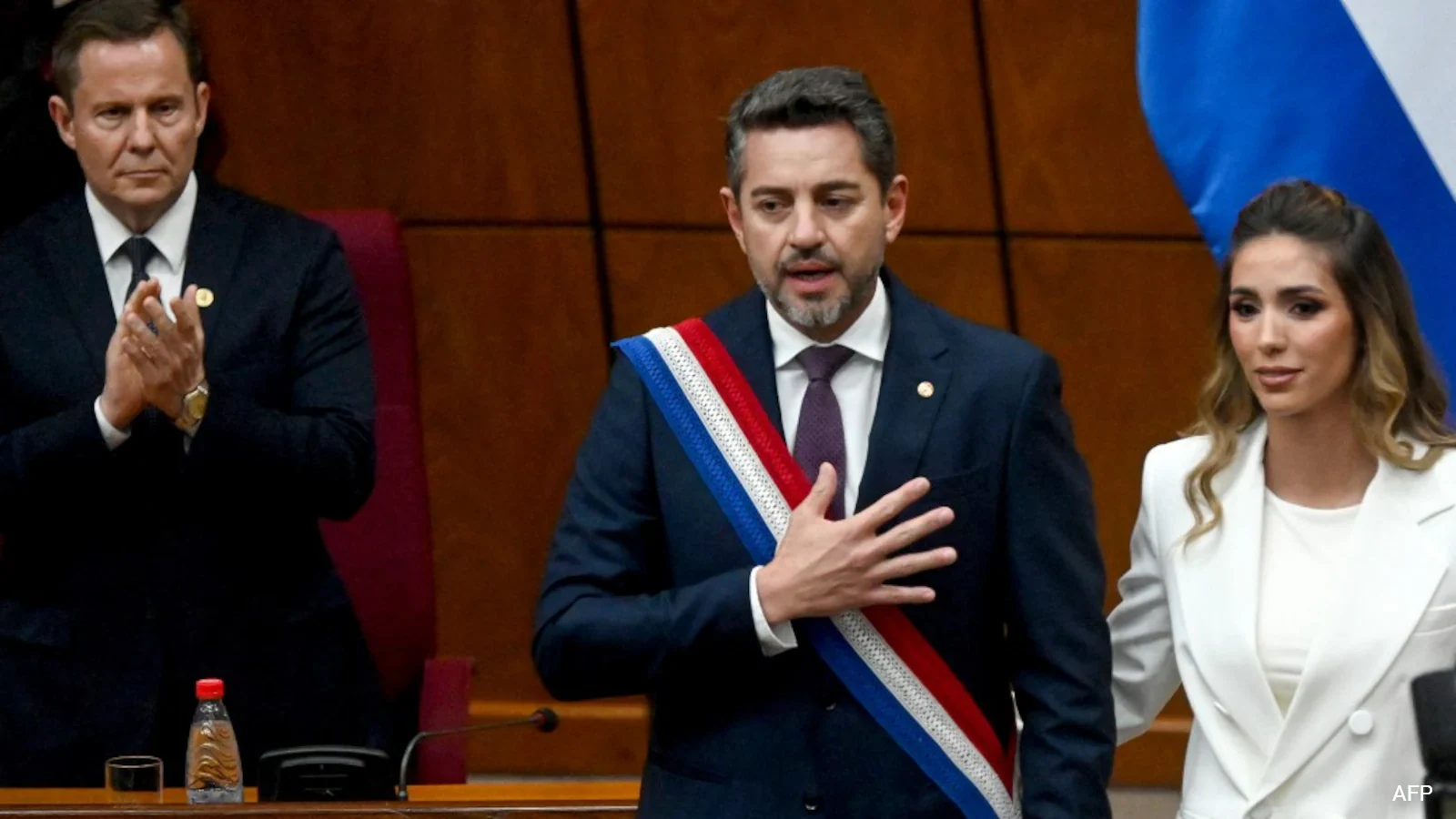
Pedro Alliana has been sworn in as Paraguay’s president following the impeachment of former President Santiago Peña over the collapse of Ueno Bank, a financial crisis that left approximately 2.9 million customers unable to access their savings and triggered nationwide protests.
Also read: APC Highlights Tinubu’s Education Reforms Ahead of 2027 Poll
Alliana, who previously served as vice-president, assumed office in Asunción on Friday, November 6, 2026, after Paraguay’s Senate voted overwhelmingly to remove Peña over allegations of poor performance in office, conflicts of interest and the mishandling of public funds linked to the troubled financial institution.
The Senate President, Basilio Núñez, declared Peña guilty of poor performance in his duties after 44 of the 45 senators voted in favour of impeachment, with one lawmaker absent.
The decision brought an abrupt end to Peña’s presidency and placed Alliana in charge of a government facing mounting pressure to restore public confidence in the country’s financial institutions and recover depositors’ money.
Hundreds of protesters gathered outside Congress to celebrate the former president’s removal, with many demanding accountability and the return of their savings.
“Justice has been done. Now we want him to give us back our money and go to jail,” Jessica Aquino, a 32-year-old protester, told AFP.
Minutes after his removal, Paraguayan authorities placed Peña under house arrest pending further legal proceedings, according to prosecutor Silvia Margarita González Vester.
The former president is expected to face questioning over alleged breach of trust, influence peddling and misappropriation of funds.
The investigations concern the supervision and eventual resolution of Ueno Bank, as well as the placement of public funds in the institution. Peña has denied wrongdoing and rejected allegations that his previous business connections influenced government decisions concerning the bank.
In his first major statement after assuming office, Alliana promised that affected depositors would not be abandoned.
“Compatriots who are now going through a difficult time as a result of the financial collapse will be fully compensated,” he said.
Alliana, who is expected to complete the remainder of Peña’s presidential term in 2028, inherits a financial and political crisis that has shaken confidence in Paraguay’s banking system.
How Ueno Bank’s collapse triggered a political crisis
At the centre of the controversy is Ueno Bank, a rapidly expanding digital financial institution that grew from a relatively small fintech operation into one of Paraguay’s most prominent lenders.
The bank attracted millions of customers through its digital-first services, competitive offers and appeal to low-income households and people previously excluded from conventional banking.
It also handled pension payments and deposits belonging to several government institutions, making its sudden collapse particularly damaging to ordinary citizens and public finances.
Paraguay’s Central Bank intervened after discovering that Ueno’s solvency ratio had fallen below half the legally required minimum.
The intervention effectively froze customer accounts, disrupted electronic transfers and card payments, and prevented millions of people from accessing their savings.
Ueno had approximately 2.9 million customers, representing about 60 per cent of Paraguay’s adult population.
Its exposure to public-sector deposits was estimated at between $800 million and $850 million, including substantial funds belonging to the state pension and health system.
The crisis quickly developed into a political scandal because of Peña’s previous financial connections to Grupo Vázquez, the conglomerate that controlled Ueno Bank.
Peña held an interest in the group’s businesses before divesting his stake in 2025.
Opposition lawmakers accused him of benefiting from conflicts of interest and using his political influence to direct public funds towards the financial institution.
They also questioned his appointment of Carlos Carvallo, a former Ueno executive, as Central Bank president, arguing that the appointment weakened regulatory independence.
Peña rejected the accusations, while the authorities have launched investigations into the bank’s operations, regulatory oversight and the handling of public funds.
The controversy has also drawn scrutiny towards the state pension system, which reportedly held approximately $355 million in deposits with Ueno.
Depositors begin receiving partial payments
Amid growing public anger, Paraguay’s Central Bank began releasing advance payments to some affected customers on Thursday, November 5.
José Maciel of the Central Bank’s Deposit Guarantee Fund said the initial payments would cover eligible customers with balances of up to approximately $1,600.
The first beneficiaries include depositors without outstanding loans who have accounts with another financial institution in Paraguay through which the payments can be processed.
Maciel said additional categories of beneficiaries would be announced progressively as the payment exercise continued.
The Central Bank has also indicated that deposit insurance covers approximately 97 per cent of Ueno’s customers, although questions remain about the timing and recovery of larger deposits.
Protests, arrests and wider economic consequences
The collapse has generated demonstrations across Asunción and other Paraguayan cities, with thousands of residents demanding the return of their money and accountability from political and financial officials.
During one demonstration on Thursday, police used tear gas and water cannons to disperse protesters who had gathered to demand Peña’s removal.
Cynthia Farina, one of the demonstrators, told AFP that the crisis had affected her family, including her son, who had savings in Ueno Bank.
The scandal has also claimed the positions of senior public officials, including Central Bank President Carlos Carvallo and Interior Minister Enrique Riera.
Eight Ueno executives have been arrested, while police have conducted searches at locations connected to Grupo Vázquez.
The consequences have extended beyond Paraguay’s financial sector. In neighbouring Argentina, approximately 1,000 employees of ITTI, a technology company associated with Grupo Vázquez, were reportedly suspended for 30 days without pay.
Football has also been affected because Ueno Bank sponsors several first-division clubs and Paraguay’s national team.
Players representing the national side issued a statement on social media expressing concern over the situation, saying they had also been affected by the crisis.
Meanwhile, the United States Embassy in Paraguay expressed solidarity with the country’s people but did not directly comment on Peña’s removal.
A difficult transition for Alliana
Although Alliana has promised full compensation for affected depositors, his administration faces significant challenges in rebuilding confidence in the country’s financial system.
The new president must also navigate ongoing criminal investigations, public demands for accountability and concerns about the protection of pension funds and other government resources.
His own political position has not been entirely insulated from the controversy.
Opposition lawmakers previously sought his impeachment alongside Peña over the Ueno Bank crisis, although that effort failed to secure congressional approval.
Prosecutors have also included Alliana among officials facing scrutiny in the wider investigations, although no finding of guilt has been established against him.
For Paraguay, the transfer of power represents more than a change in presidential leadership.
It marks an extraordinary political consequence of a banking collapse that exposed vulnerabilities in financial regulation and left millions of households uncertain about their savings.
Also read: Wike Declares Obi’s 2027 Political Wave ‘Dead’
Alliana’s ability to secure the return of depositors’ money, establish accountability and restore confidence in public institutions will be central to determining whether his administration can bring the crisis under control.



