

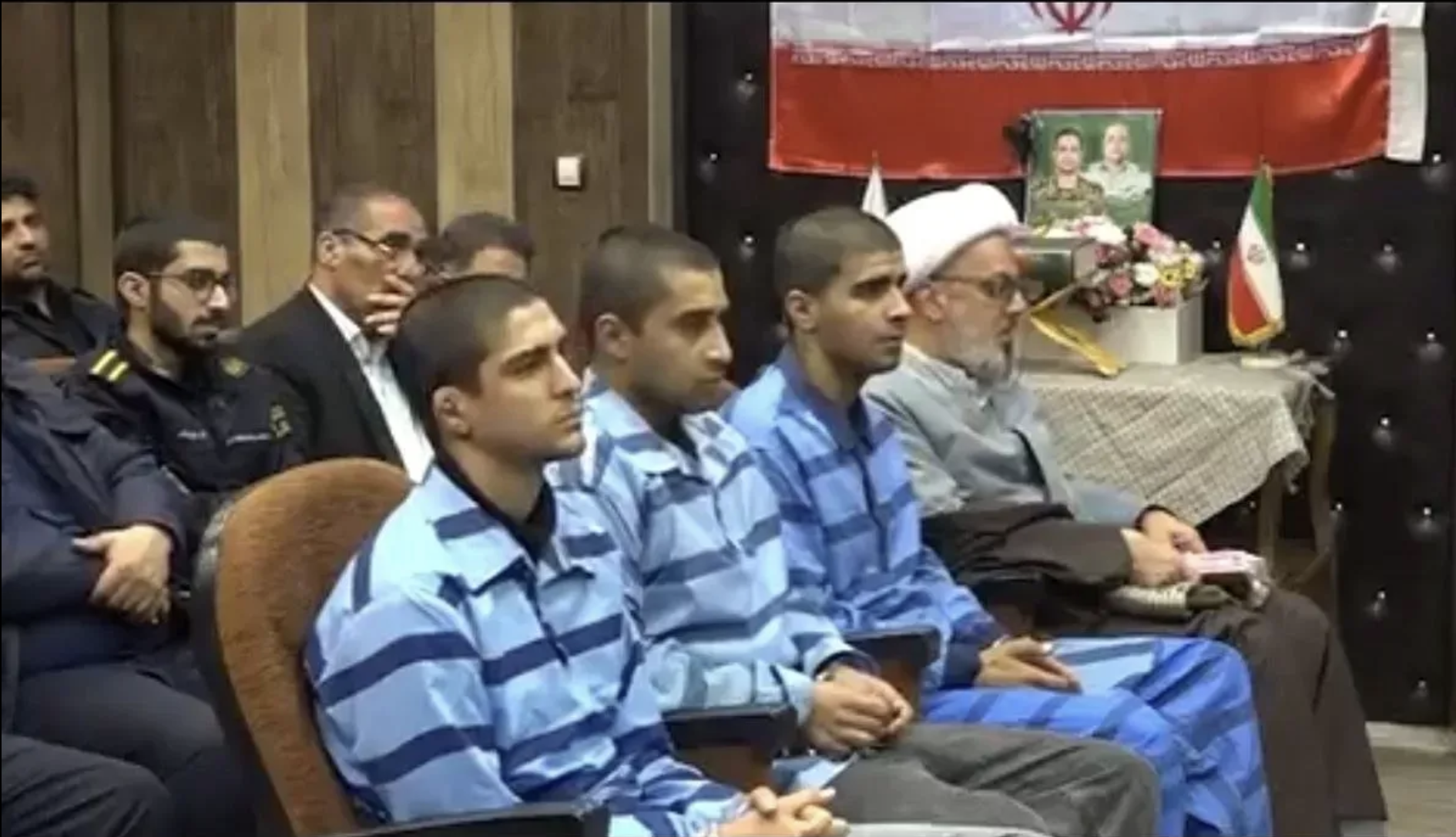
Iran Executes Three Men Over Alleged Israeli-US Links During Protests
Iranian authorities say Hassan Divband, Hamid Kazemi and Reza Zanganeh were involved in violent operations during January’s anti-government demonstrations, while rights groups have disputed the government’s account of the crackdown
Iranian authorities have executed three men accused of carrying out operations on behalf of Israel and the United States during January’s anti-government protests in Karaj, west of Tehran, on Sunday, November 8, 2026, following the Supreme Court’s confirmation of their death sentences.
Also read: US Offers $20m Reward for Iran Nuclear Secrets
The three men, identified by the judiciary as Hassan Divband, Hamid Kazemi and Reza Zanganeh, were convicted of participating in armed activities allegedly linked to foreign governments and groups described by Tehran as hostile.
Iran’s judiciary announced the executions through its Mizan Online news agency, saying the sentences had been carried out after being upheld by the Supreme Court.
According to the judiciary, the men participated in attacks involving firearms, grenades and Molotov cocktails.
They were also accused of using bladed weapons, setting fire to public facilities and damaging electricity infrastructure in Karaj, resulting in power disruptions in some areas.
The authorities further alleged that the defendants encouraged others to participate in acts of violence during the unrest. Their assets were also ordered to be confiscated.
Ten other people were reportedly arrested in connection with the case, with the remaining defendants receiving prison sentences ranging from five to 10 years.
The executions form part of a wider series of capital punishments imposed by Iranian authorities on individuals accused of involvement in the January demonstrations or collaboration with foreign governments.
The protests began in late December 2025, initially driven by economic hardship, rising living costs and public frustration.
However, the demonstrations quickly developed into a nationwide movement challenging the Iranian government.
The unrest reached its peak on January 8 and 9, 2026, when widespread demonstrations and confrontations with security forces were reported across several cities.
Iranian authorities have acknowledged more than 3,000 deaths during the unrest, blaming what they described as terrorist operations supported by Israel and the United States.
The government has maintained that armed groups exploited the demonstrations to attack public infrastructure and security personnel.
However, international human rights organisations have presented a different account of the crackdown, accusing Iranian security forces of using excessive and unlawful force against protesters.
Iran Human Rights, a Norway-based monitoring organisation, reported that its investigation documented at least 4,200 people killed during the January protests, with a substantial proportion of the deaths occurring on January 8 and 9.
The organisation has also raised concerns about the fairness of judicial proceedings against detained protesters.
Human Rights Watch and the Abdorrahman Boroumand Centre for Human Rights in Iran have similarly criticised the growing use of the death penalty in politically sensitive cases.
In a September 10 report, the organisations said Iranian authorities had executed at least 59 men between March 18 and the end of August 2026 in politically motivated cases involving broadly framed national security charges.
At least 29 of those executed had been arrested in connection with the December 2025 and January 2026 protests.
Bahar Saba, a senior Iran researcher at Human Rights Watch, criticised the proceedings, saying: “Day after day, Iran’s authorities are sending protesters, including teenagers, to the gallows based on torture-tainted ‘confessions’ and following grossly unfair proceedings.”
The organisation also argued that several executed protesters had not been accused of killing anyone, raising concerns about the proportionality of the sentences and the treatment of defendants.
The concerns have intensified since the outbreak of the Middle East war on February 28, 2026, following US and Israeli strikes against Iranian military and strategic targets.
Iranian authorities have since increased arrests and prosecutions involving alleged espionage, collaboration with foreign governments and threats to national security.
A report by the UK Parliament’s House of Commons Library, published in August, noted that at least 56 people had been executed on national security-related charges since March, including 27 people connected to the January protests.
The briefing also highlighted concerns raised by human rights organisations over the increasing use of capital punishment.
The United Nations human rights office has also expressed concern about the treatment of detainees and the use of executions in cases connected to the demonstrations.
The latest executions are likely to renew international scrutiny of Iran’s judicial response to the protests, particularly allegations of unfair trials, coerced confessions and the use of the death penalty against individuals accused of national security offences.
Also read: Trump Says US Has Crushed Iran’s Military, Warns of More Strikes
While Tehran maintains that the prosecutions are necessary to address violent attacks and foreign-backed operations, rights organisations continue to call for greater transparency, fair trials and an end to executions linked to peaceful dissent.




Pingback: Israeli Strikes Kill Six Palestinians Despite Gaza Ceasefire – FreshUpdates News