

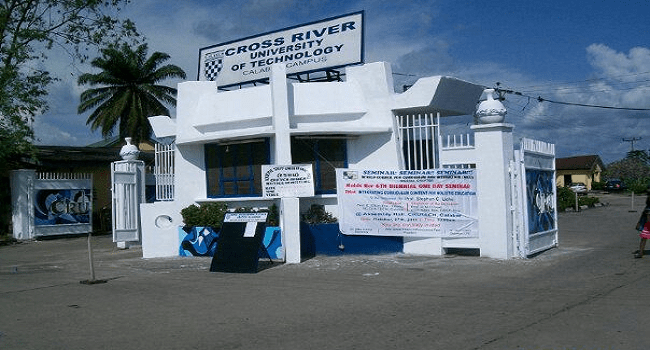
ASUU Suspends 14-Day Strike at Cross River University Demands Lasting Solution
The university’s ASUU chapter has called off its two-week industrial action following government engagements and appeals from students, parents and other stakeholders, although several welfare demands remain unresolved
The Academic Staff Union of Universities (ASUU), University of Cross River State (UniCross) chapter, has suspended its 14-day industrial action following interventions by the Cross River State Government and university management, offering relief to students whose academic activities were disrupted by the dispute.
Also read: ASUU President Issues Fresh Warning to Members Over 2027 Elections
The union’s chapter chairman, Dr Patrick Ushie, confirmed the suspension in an interview with the News Agency of Nigeria (NAN) in Calabar on Tuesday, November 17, 2026, saying the decision was taken in the interest of students, parents and other stakeholders who intervened to resolve the disagreement.
Ushie explained that although the government had addressed some of the union’s demands, negotiations were continuing over outstanding welfare issues.
He said the union considered the impact of the prolonged disruption on students and decided to give ongoing discussions with the government an opportunity to produce a lasting resolution.
The chairman, however, emphasised that suspending the strike should not be interpreted as a complete resolution of the dispute, warning that sustained government commitment would be necessary to prevent another interruption of academic activities.
The development followed an emergency congress held on Monday, November 16, at the university’s Calabar campus, where members unanimously approved a motion to suspend the industrial action.
The branch leadership, including Ushie and the Calabar Zonal Coordinator, Dr Ikechukwu Igwenyi, briefed members on progress made during negotiations with the university management and state government.
The university subsequently confirmed that the decision followed improvements in the implementation of staff welfare arrangements, particularly the approval of the new Consolidated Academic Tools Allowance (CATA) and the payment of outstanding salaries.
A significant development was Governor Bassey Otu’s approval and implementation of the revised CATA structure, alongside the payment of October 2026 salaries.
The governor also directed that October, November and December salaries be paid under the new allowance structure.
The intervention followed an earlier engagement on November 2, when Vice-Chancellor, Professor Francisca Bassey, personally addressed ASUU members at an emergency congress and appealed for patience while the government worked towards meeting the union’s demands.
Although the vice-chancellor outlined efforts to resolve outstanding financial obligations, including inherited check-off dues through instalment payments, members initially rejected the appeal and resolved to continue the strike.
At another congress on November 9, the union acknowledged receiving October salaries reflecting the new CATA arrangement but raised concerns over payment discrepancies, outstanding salary obligations and the implementation of the non-financial provisions of the 2025 Federal Government-ASUU renegotiated agreement.
Management subsequently promised to settle outstanding October salary balances alongside November salaries.
It also assured lecturers that September salaries would be paid in the second week of December. However, the university facilitated the payment of the September salaries on November 11, ahead of the promised timeline, marking another step towards resolving the disagreement.
The latest suspension marks the second time in 2026 that the UniCross ASUU chapter has halted industrial action following negotiations with the government.
The union initially embarked on an indefinite strike on May 19 over welfare concerns and the alleged failure of the government to implement agreements reached with academic staff.
The 63-day strike was suspended on July 21 following meetings involving union representatives and government officials.
However, the union resumed the industrial action on November 2, accusing the government of failing to fulfil some of the commitments made before the July suspension.
The latest strike lasted 14 days before members agreed to suspend it following renewed interventions and progress on some of their demands.
Among the 11 demands presented by the union were the full implementation of the approved salary structure and other welfare benefits for academic staff, as well as immediate implementation of the non-financial components of the 2025 renegotiated agreement.
The union also demanded increased government funding for the university and prompt payment of monthly salaries not later than the third day of each succeeding month.
Other outstanding issues included unpaid salaries and arrears of the 35 per cent and 25 per cent wage awards implemented in public universities since January 2023.
ASUU-UniCross further demanded the remittance of outstanding check-off dues owed to its chapter and national body since 2017, amounting to N11.9m, alongside deductions for December 2024 and November 2025.
The union also sought payment of outstanding promotion arrears and earned academic allowances accrued between July 2011 and December 2017 under the 2009 Federal Government-ASUU agreement.
Another contentious issue concerns the non-financial provisions of the 2025 agreement, particularly arrangements relating to the appointment of heads of departments.
University management explained that implementing some of these provisions would require legislative intervention by the Cross River State House of Assembly.
The explanation highlights the complexity of some of the outstanding demands, which extend beyond immediate salary payments and require administrative and legislative action.
With the suspension now in place, normal academic activities are expected to resume, providing some relief to students who had their first-semester activities disrupted shortly after the 2026/2027 academic session commenced on October 19.
However, the unresolved demands mean that the university’s industrial relations situation remains dependent on the government’s ability to honour its commitments and sustain negotiations with the union.
For students and parents, the immediate priority will be the restoration of uninterrupted lectures and the recovery of academic time lost during the industrial action.
Also read: FG Orders 3-Month Recovery of Excess University Allowances
The latest development also presents an opportunity for the state government and university management to address the outstanding issues before another disagreement threatens the institution’s academic calendar.



