

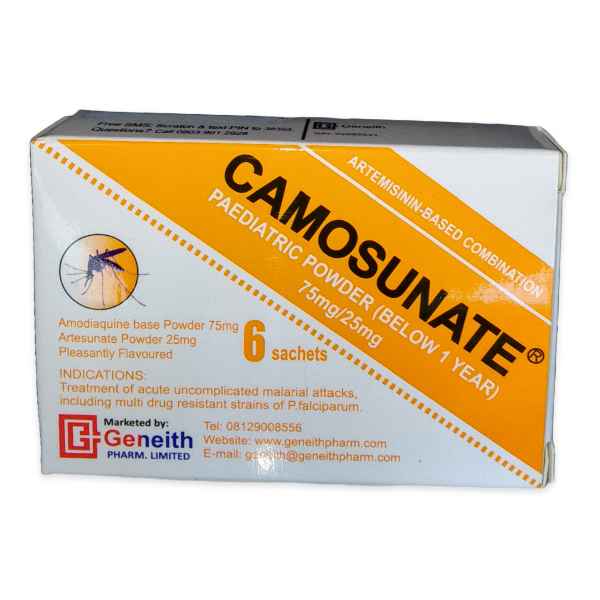
NAFDAC Debunks Viral Claim, Says Camosunate Not Banned
The agency says the antimalarial medicine containing artesunate and amodiaquine remains approved for use in Nigeria, while acknowledging possible side effects and urging consumers to report adverse reactions
The National Agency for Food and Drug Administration and Control (NAFDAC) has dismissed claims circulating on social media that Camosunate, an antimalarial medicine containing artesunate and amodiaquine, has been banned in Nigeria, reassuring the public that the drug and medicines containing the combination remain unprohibited.
Also read: NAFDAC Destroys N22.73bn Unsafe Products in Eight Months
In a statement dated Saturday, November 21, 2026, and signed by the agency’s Director-General and Chief Executive Officer, Professor Mojisola Adeyeye, NAFDAC described the viral claim as false and urged Nigerians to stop circulating unverified information about the medicine.
The agency clarified that it had never banned Camosunate or medicines containing the artesunate-amodiaquine combination, despite claims suggesting that the drug had been prohibited over reported health concerns.
NAFDAC acknowledged, however, that some of the symptoms mentioned in the circulating reports could be associated with known side effects of the medicine.
These include nausea, vomiting, diarrhoea, abdominal pain, headache, dizziness, drowsiness and loss of appetite.
The agency stressed that reports of suspected adverse reactions should be subjected to proper assessment rather than used as a basis for spreading claims about the drug’s regulatory status.
“Some of the symptoms reported in the viral claim may be associated with known side effects of Camosunate, including nausea, vomiting, diarrhoea, abdominal pain, headache, dizziness, drowsiness and loss of appetite,” the statement said.
NAFDAC encouraged members of the public and healthcare professionals who suspect adverse reactions after using the medicine to report them through the agency’s Med Safety App, available for download on Android and iOS devices, or at the nearest NAFDAC office.
The agency said the reports would assist in the proper assessment and monitoring of suspected adverse drug reactions.
It also urged Nigerians to stop sharing the alleged ban and appealed to those who had already circulated the information to disseminate its clarification through the same channels to counter misinformation and prevent unnecessary public concern.
The clarification comes amid growing concerns over medicine safety and the circulation of unverified health information on social media, particularly claims that can influence patients’ decisions about prescribed treatments.
Camosunate contains artesunate and amodiaquine, a combination used in the treatment of malaria. The medicine is available in different formulations, including tablets and paediatric preparations.
NAFDAC’s official Greenbook lists Camosunate Children Powder, containing artesunate and amodiaquine, as an active registered medicine.
The product’s registration, number 04-7908, is listed as valid from November 26, 2025, to November 25, 2030.
The agency’s clarification reinforces the distinction between a medicine’s known side effects and its regulatory status, noting that reports of adverse reactions do not automatically mean a product has been banned.
The public has been advised to rely on official NAFDAC communications and qualified healthcare professionals for information about medicines, while suspected adverse reactions should be reported through the agency’s established pharmacovigilance channels.
NAFDAC reiterated that the circulation of unverified claims could create unnecessary anxiety among patients and undermine public confidence in medicines and healthcare services.
Also read: NAFDAC Seizes N560m Banned Chemicals in Kano
The agency urged Nigerians to share its clarification to ensure that accurate information reaches those who may have been exposed to the viral claim.




Pingback: NAFDAC Shuts Abuja Market, Seizes ₦300m Fake Goods – FreshUpdates News