

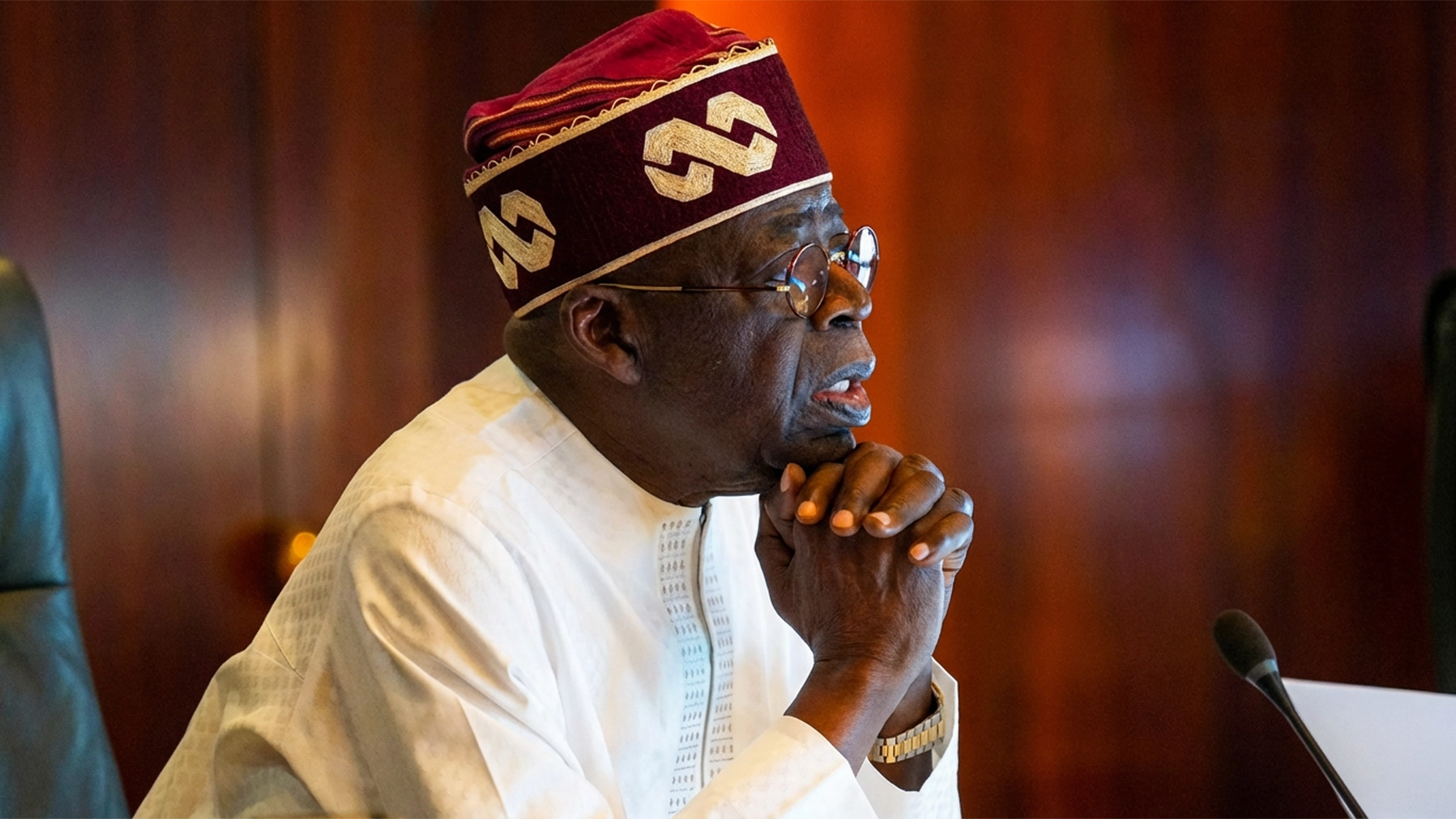
Tinubu Wins Senate Approval for $20.5bn Loan Plan
The National Assembly endorses a supplementary external borrowing programme for 2026 and 2027 as the President seeks to cut the 2026 budget by ₦3.147 trillion while retaining its ₦31.457 trillion deficit
President Bola Ahmed Tinubu has secured Senate approval for a supplementary external borrowing programme worth $20.517 billion and €1.045 billion for 2026 and 2027, following a legislative endorsement in Abuja on Tuesday, November 24, 2026, amid fresh adjustments to the Federal Government’s spending plans.
Also read: Tinubu Approves N250m Aid as Bayelsa Boat Deaths Hit 29
The approval followed consideration of a report by the Senate Committee on Local and Foreign Loans, completing the National Assembly’s endorsement of the President’s request after the House of Representatives had earlier approved the proposal.
The borrowing programme is intended to finance infrastructure and other development projects, as well as meet government commitments over the two-year period.
The development comes at a time when Nigeria is balancing its infrastructure financing needs against mounting debt obligations and a substantial budget deficit.
However, the approval should be distinguished from another external borrowing request contained in the 2026 Appropriation Act. The President also sought legislative authorisation for approximately $7.707 billion in external borrowing to part-finance the 2026 budget.
The two proposals are separate financing arrangements, although both form part of the Federal Government’s wider external borrowing framework.
The Senate’s decision also coincided with President Tinubu’s request for legislative approval of a revised 2026 Appropriation Act, which seeks to reduce government expenditure without changing the overall deficit or borrowing targets.
In a letter titled Transmission of FGN 2026 Appropriation Repeal and Re-enactment Bill and Revised 2026 Federal Government Fiscal Framework, Tinubu proposed reducing the approved 2026 budget from ₦68.323 trillion to ₦65.176 trillion, representing a decrease of ₦3.147 trillion.
The President explained that the adjustments were designed to accommodate existing government obligations, address outstanding commitments and improve the implementation of capital projects.
He said: “The adjustments are intended to prioritise existing commitments, strengthen the credibility of the budget and improve capital budget implementation while maintaining fiscal discipline.”
Under the revised framework, projected Federal Government revenue, including earnings from government-owned enterprises, stands at ₦33.720 trillion, while capital expenditure is estimated at ₦26.232 trillion.
Despite the proposed spending reduction, the fiscal deficit remains unchanged at ₦31.457 trillion, equivalent to 5.64 per cent of Nigeria’s Gross Domestic Product.
The government’s proposed borrowing requirement also remains at ₦29.218 trillion, comprising ₦18.428 trillion in domestic borrowing and ₦10.790 trillion in external financing.
Tinubu maintained that the proposed $7.7 billion external borrowing, estimated at approximately ₦10.368 trillion, would finance an existing provision in the 2026 budget rather than increase the overall borrowing limit.
The revised budget request was presented to the Senate by Senate President Godswill Akpabio, who subsequently referred it to the Senate Committee on Rules and Business for legislative consideration.
The latest borrowing approvals come against the background of Nigeria’s expanding public debt portfolio and the administration’s reliance on external financing to support infrastructure and development programmes.
Figures published by the Debt Management Office showed that Nigeria’s total public debt stood at ₦166.79 trillion as of June 30, 2026.
External debt accounted for approximately ₦75.20 trillion, representing 45.09 per cent of the country’s total public debt, while domestic obligations stood at ₦91.59 trillion.
The Central Bank of Nigeria’s second-quarter 2026 economic report also put public debt at 31.78 per cent of GDP, noting that the increase during the quarter was driven by new borrowings.
Although the debt-to-GDP ratio remains below the country’s stated debt ceiling, the scale of borrowing continues to raise questions about debt servicing, revenue generation and the government’s capacity to translate borrowed funds into productive investments.
The Central Bank’s September 2026 monetary policy commentary identified debt servicing as a significant pressure on public finances, noting that it absorbs more than half of current government revenue and limits the resources available for other spending priorities.
Tinubu’s 2026 budget has also undergone significant adjustments. The President initially presented a ₦58.47 trillion spending proposal to the National Assembly in December 2025.
Following a request for an upward review, the National Assembly increased the proposed expenditure to ₦68.323 trillion, which Tinubu signed into law on April 17, 2026.
The latest revision seeks to bring expenditure down to ₦65.176 trillion while accommodating outstanding financial obligations and maintaining the existing deficit and borrowing framework.
The President is expected to present the 2027 budget to the National Assembly before the end of December, setting the stage for another round of legislative scrutiny of the Federal Government’s spending and financing priorities.
Also read:
The new borrowing programme is therefore expected to remain a significant part of discussions around Nigeria’s infrastructure financing, fiscal sustainability and long-term debt obligations.
There is a discrepancy in the reported euro figure that should be corrected before publication.
Also read: Tinubu Unveils ₦450bn Agric Boost, Targets 500,000 Farmers
The precise amount in the President’s original borrowing request, as reported by The Punch and Tribune, is €1,045,083,643 (approximately €1.045 billion), not €1.45 billion.



