

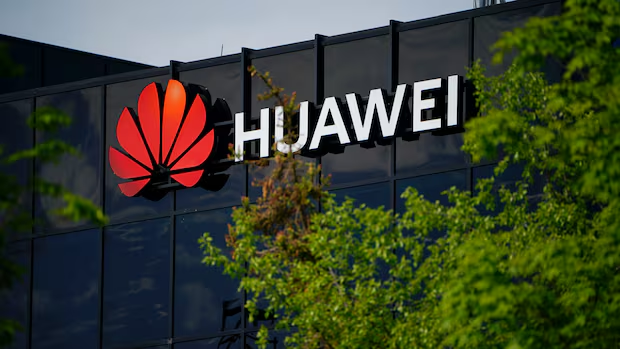
Huawei Found Guilty of Bank Fraud, Trade Secret Theft in US
The Chinese technology company faces possible financial penalties after a New York jury convicted it of fraud and trade secret offences but cleared it of two other charges
Chinese telecommunications giant Huawei Technologies has been found guilty of bank fraud, wire fraud, sanctions violations and conspiracy to steal trade secrets by a United States federal jury, following a lengthy criminal trial in New York.
Also read: OPay, Google Unveil Five Finalists for ₦18m Innovation Challenge
The jury returned guilty verdicts on Tuesday, November 24, 2026, convicting Huawei on 10 of the 12 criminal counts it faced in the case, which centred on allegations that the company deceived financial institutions over its business activities in Iran and stole technological information from American companies.
However, the jury acquitted Huawei of racketeering conspiracy and conspiracy to obstruct justice, rejecting two major elements of the prosecution’s case.
Three Huawei subsidiaries, including Chinese subsidiary Huawei Device Co. Ltd. and US-based Futurewei Technologies Inc. and Huawei Device USA Inc., were also defendants in the trial. According to the US Department of Justice, the companies were convicted of various offences, including conspiracy to steal trade secrets, bank fraud, wire fraud, money laundering conspiracy and violations of US sanctions.
The verdict followed a 12-week trial before US District Judge Ann M. Donnelly at a federal court in Brooklyn, where prosecutors called more than 60 witnesses, while the defence presented 15 witnesses.
In a statement following the verdict, Huawei said the acquittal on the racketeering conspiracy charge supported its position that the allegations against the company lacked a factual basis.
The company also rejected the remaining convictions, describing the trade secret disputes cited by prosecutors as civil matters that had been resolved over the past two decades.
“The racketeering acquittal confirms that these allegations lack factual basis and vindicates our consistent position over the past eight years,” Huawei said.
“We believe the government’s remaining charges are equally without legal or factual merit.
“The five trade secret-related disputes cited by the government were all civil matters that were resolved over the past two decades.
“No court ever found Huawei liable for willful intellectual property misappropriation, and the company was never ordered to pay damages for trade secret misappropriation.”
Huawei said it would review the verdicts and take necessary legal steps to defend its interests.
The company’s lawyer, Brian Heberlig, also said Huawei intended to appeal the convictions, describing the racketeering acquittal as a significant rejection of the government’s wider allegations against the company.
The US Department of Justice, however, maintained that the verdict demonstrated the seriousness of the company’s conduct.
US Attorney General Todd Blanche said no individual or company was above the law, while US Attorney for the Eastern District of New York, Joseph Nocella Jr., accused Huawei and its subsidiaries of engaging in activities that undermined American commerce and national security.
The prosecution alleged that Huawei misled international banks, including HSBC, Standard Chartered and BNP Paribas, about its relationship with Skycom, a company operating in Iran.
According to prosecutors, Huawei falsely presented Skycom as an independent business partner rather than an affiliate, allowing it to conceal the extent of its Iranian operations from financial institutions and continue transactions despite US sanctions.
The case also involved allegations that Huawei obtained confidential technology and trade secrets from several American companies, including Cisco Systems, T-Mobile, Quintel USA, Fujitsu and semiconductor company CNEX.
Prosecutors presented evidence they said showed attempts to obtain router source code, wireless antenna technology and other proprietary information.
The defence, however, argued that prosecutors had combined unrelated incidents involving individual employees to portray the company as part of a long-running criminal conspiracy.
Huawei also maintained that the banks involved were aware of its Iranian business activities and that the trade secret disputes had been resolved through civil proceedings.
Sentencing has been scheduled for September 14, 2027, when Huawei and its subsidiaries could face substantial financial penalties, including criminal fines, forfeiture and restitution.
Although the exact amount has not been determined, the Associated Press reported that the companies could face billions of dollars in penalties.
The case dates back to 2018, when Canadian authorities arrested Huawei’s Chief Financial Officer, Meng Wanzhou, in Vancouver at the request of the United States.
Meng, the daughter of Huawei founder Ren Zhengfei, was accused by American prosecutors of misleading an HSBC banker about the company’s relationship with Skycom and its business activities in Iran, allegedly exposing the bank to sanctions-related risks.
The US formally announced criminal charges against Huawei and Meng in January 2019, with the indictment also naming Huawei subsidiaries and detailing allegations of bank fraud, wire fraud, money laundering and sanctions violations.
Meng fought extradition to the United States for nearly three years before reaching a deferred prosecution agreement in September 2021, allowing her to return to China. The US subsequently dropped the charges against her.
The case also contributed to escalating tensions between Washington and Beijing, particularly over technology, trade and national security.
In 2019, the US government placed Huawei on its trade blacklist, restricting the company’s access to American technology and components over national security concerns and allegations of links to the Chinese government.
Huawei has consistently rejected accusations that it poses a security threat, maintaining that it operates independently and complies with applicable laws.
Despite the restrictions, the company has continued expanding its global business, including telecommunications equipment, smartphones and semiconductor development.
Also read: Google Selects 3 Nigerian AI Start-ups for Africa Lab
The latest verdict represents a major legal setback for Huawei in the United States, although its acquittal on the racketeering and obstruction charges provides the company with grounds to challenge aspects of the prosecution’s case as it prepares for sentencing and a possible appeal.



