

INEC Strengthens AI Safeguards Ahead of 2027 Polls
The electoral commission is strengthening verification systems and partnering with fact-checkers and government agencies as West African stakeholders adopt a regional plan to tackle election-related disinformation
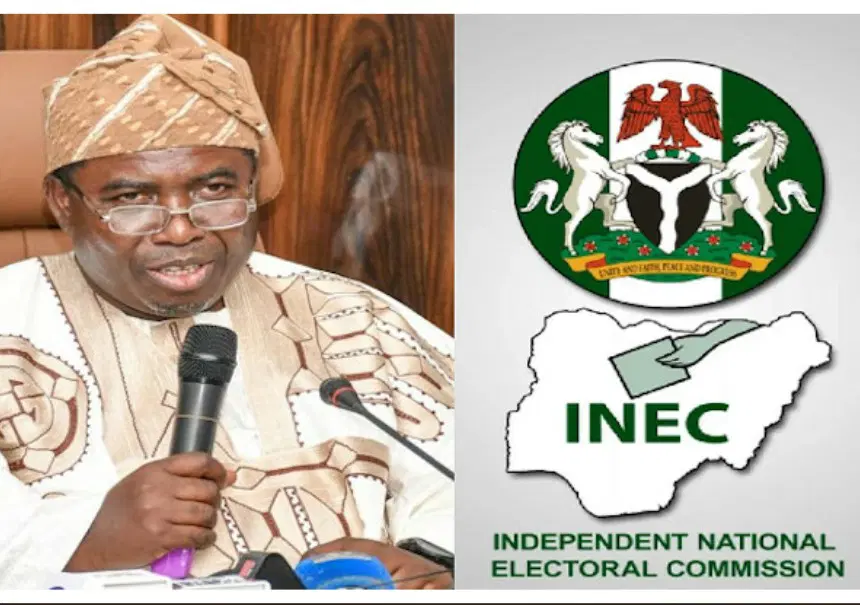
The Independent National Electoral Commission (INEC) has announced strengthened measures to combat artificial intelligence-generated misinformation and false electoral narratives ahead of Nigeria’s 2027 general elections, including improved verification systems and collaboration with fact-checking organisations.
Also read: INEC Removes 1.6 Million Invalid Voter Records, Register Falls to 100 Million
INEC Chairman, Prof. Joash Ojo Amupitan, disclosed this on Wednesday, November 25, 2026, during a two-day International Multi-Stakeholder Forum on Disinformation in Electoral Contexts in West Africa, held in Abuja.
Amupitan, who was represented by his Chief Press Secretary, Dayo Oketola, said the commission was working with the National Orientation Agency, civil society organisations and fact-checking groups to improve electoral information management and protect public confidence in the democratic process.
He said the measures were necessary as artificial intelligence, manipulated audio-visual content and misleading narratives increasingly threatened the credibility of elections.
The commission has also identified improved verification safeguards on its INEC Result Viewing Portal, proactive public communication and a dedicated Artificial Intelligence Division within its Information and Communications Technology Department as important parts of its response.
Amupitan stressed that electoral misinformation could no longer be treated as an isolated national challenge, as false narratives originating in one West African country could be adapted and circulated in neighbouring states.
He called for stronger cooperation among electoral management bodies, technology companies, media organisations, civil society groups and other stakeholders to ensure voters have access to accurate and timely information.
The forum was organised by the Fundación para la Internacionalización de las Administraciones Públicas (FIAP) in collaboration with FactCheckAfrica under the European Union Support to ECOWAS in Peace, Security and Governance Project.
It brought together journalists, fact-checkers, civil society organisations, electoral stakeholders and technology experts from Nigeria, The Gambia and Benin to examine emerging threats to electoral information integrity.
Speaking at the event, FactCheckAfrica founder, Abideen Olasupo, warned that the use of indigenous languages to manipulate public understanding was creating a growing challenge for fact-checkers.
He described the practice as “hyper-local manipulation”, noting that disinformation actors increasingly targeted communities that were underserved by conventional fact-checking interventions.
Olasupo said improving access to credible electoral information in local languages was essential to addressing the problem, particularly as misleading audio recordings, manipulated broadcasts and false political claims circulated through community networks.
Diplomatic representatives also called for stronger regional cooperation, warning that electoral misinformation could influence public opinion beyond the borders of the country where it originated.
The Head of Cooperation at the European Union Delegation to Nigeria and ECOWAS, Massimo De Luca, said the consequences could extend to Nigerians living abroad, who might also be exposed to misleading accounts of electoral processes and outcomes.
He urged governments and media organisations to take greater responsibility for limiting the spread of false information.
The Spanish Ambassador to Nigeria, Félix Costales, highlighted the importance of fact-checking in protecting electoral integrity but warned against using the fight against misinformation to restrict legitimate public debate.
“The fight against misinformation should not be a weapon against legitimate debates,” Costales said.
Similarly, the Deputy Head of Mission at the Danish Embassy, Julie Rosenkilde Hannibal, reaffirmed Denmark’s support for regional initiatives promoting peace, security and good governance.
She maintained that West Africa’s challenges required solutions shaped by the region’s own circumstances and experiences.
Delivering a keynote address, the Director of the International Media and Information Literacy Institute, Dr Sharon Omotoso, called for stronger media and information literacy programmes to complement fact-checking initiatives.
Omotoso warned that women could face particularly damaging consequences from coordinated gender-based disinformation designed to undermine their credibility and discourage their participation in politics.
She also cautioned against the politicisation of fact-checking, urging media organisations to maintain editorial independence and exercise care when verifying names and identifying details to avoid reputational damage.
Another major development at the forum was the launch of Elect Peace, a digital platform developed by the Dataphyte Foundation to connect civil society organisations, fact-checkers and other stakeholders working to protect electoral information integrity across West Africa.
The platform is designed to provide access to training materials, open-source verification tools and opportunities for collaboration among organisations working to counter misinformation and electoral violence.
Participants also shared experiences from interventions in Nigeria, The Gambia and Benin, examining the roles of artificial intelligence, community engagement, media literacy and independent fact-checking in responding to electoral disinformation.
Discussions covered AI-generated and synthetic media, verification of false claims in indigenous languages, the responsibilities of technology platforms and the safety of journalists, fact-checkers, women and other civic actors during elections.
Working groups subsequently developed recommendations for a Regional Action Plan on Electoral Disinformation, addressing the responsibilities of civil society and fact-checking networks, media organisations, electoral management bodies, regulators, technology platforms, academia and international partners.
The regional action plan and a joint communiqué were subsequently presented for consideration and signed by participating stakeholders, providing a framework for stronger cross-border cooperation.
The initiative is expected to improve the sharing of verification resources, strengthen local-language fact-checking and encourage coordinated responses to misleading electoral narratives across the sub-region.
For Nigeria, the measures come as preparations intensify for the 2027 general elections, with INEC facing the additional challenge of protecting public confidence against digitally manipulated content and coordinated attempts to influence voters.
Also read: INEC Denies Amupitan Resignation Rumour, Calls Report Fake
The discussions in Abuja underscored the need to balance efforts to tackle disinformation with the protection of media freedom, legitimate political debate and citizens’ right to participate in democratic processes.



