

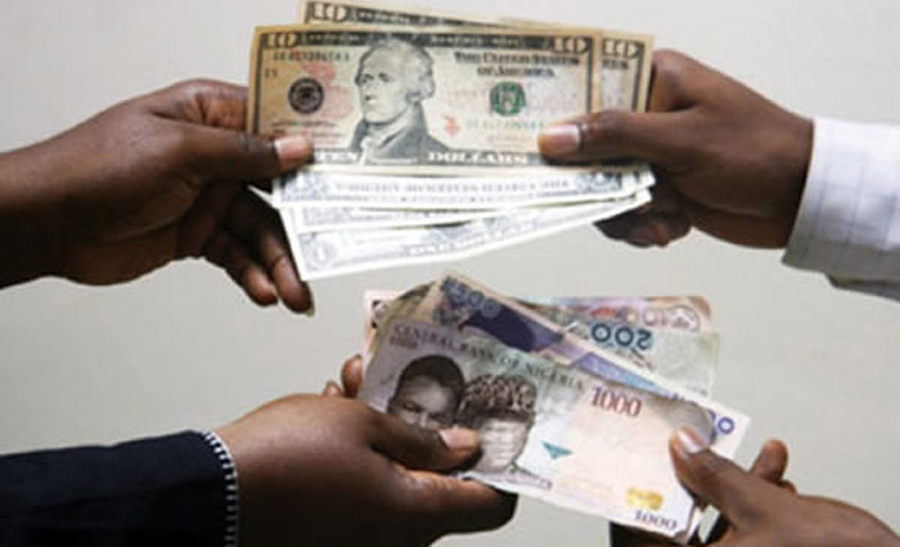
Naira Strengthens to N1,376/$ Despite FX Turnover Slump
The currency gained 1.5 per cent in two sessions, although declining dollar transactions and seasonal demand could test its recovery
The naira strengthened against the United States dollar for a second consecutive trading session on Friday, November 27, 2026, closing at N1,376/$ on the Nigerian Foreign Exchange Market (NFEM), despite a sharp decline in dollar transactions.
Also read: Naira Rises To ₦1,378/$ As CBN Eases Dollar Cash Restrictions
Data from the Central Bank of Nigeria (CBN), analysed by Nairametrics, showed that the currency gained N2 from Thursday’s closing rate of N1,378/$.
The latest appreciation brought its cumulative recovery over two trading sessions to N21, representing approximately 1.5 per cent.
Friday’s closing rate was also the strongest recorded during the trading week.
However, the improvement came alongside a significant slowdown in market activity, with interbank foreign exchange turnover falling by 54.53 per cent to $106.88m from $235.04m recorded on Thursday.
The latest figure was the lowest daily turnover for the week ended November 27 and the weakest since November 16, when transactions stood at $68.66m.
During Friday’s session, the naira traded as strongly as N1,350/$ but failed to sustain that level. The highest exchange rate also improved to N1,377.50/$ from N1,397.50/$ recorded a day earlier.
The average exchange rate strengthened by N19.88 to N1,367.78/$ from N1,387.66/$, reflecting an improvement of about 1.43 per cent.
The recovery was also reflected in the foreign exchange forwards market, where the naira appreciated by approximately 1.5 per cent across the one-month, three-month, six-month and one-year contracts.
The one-month contract closed at N1,394.21/$, while the three-month contract stood at N1,429.83/$. The six-month and one-year contracts settled at N1,473.89/$ and N1,574.70/$ respectively.
Despite the improved exchange rate, trading activity weakened considerably.
Friday’s $106.88m turnover was 84.79 per cent below Wednesday’s $702.63m and 88.52 per cent lower than Monday’s $931.23m.
Total interbank transactions for the week amounted to approximately $2.14bn, representing an average daily turnover of $428.01m.
The number of deals also declined by 33.89 per cent to 119 from 180 transactions recorded on Thursday. The average transaction value fell to approximately $898,124, compared with about $4.18m recorded on Monday.
The figures suggest that the naira’s latest appreciation was not accompanied by stronger trading activity, as both the number of transactions and their average value declined.
The currency’s rebound followed a volatile week in which it weakened to N1,397/$ on Wednesday, its weakest closing level since March 6, before recovering on Thursday and Friday.
Nairametrics reported that analysts at Cordros Securities Limited linked the recovery to approximately $1.4bn in CBN interventions, increased offshore dollar offers and foreign exchange inflows associated with the Dangote IPO.
The CBN had also increased weekly dollar allocations to licensed Bureau de Change operators from $150,000 to $1m per operator, in a move intended to improve access to foreign currency and ease pressure in the retail market.
Naira outlook amid festive and election demand
Despite the recent gains, analysts expect pressure on the foreign exchange market to persist towards the end of the year.
In its assessment, Cowry Asset Management attributed the anticipated pressure to relatively weaker net foreign exchange inflows, tight global monetary conditions and heightened investor caution ahead of Nigeria’s 2027 general elections.
The analysts also warned that seasonal import demand ahead of the festive period could increase demand for dollars and put further pressure on the naira.
They, however, maintained that the CBN’s external reserve buffers remained sufficient to support market interventions, bridge supply gaps and limit excessive exchange rate volatility.
The CBN’s November Monetary Policy Committee communiqué provides some context for the outlook. The apex bank reported that Nigeria’s gross external reserves stood at $54.02bn as of November 17, 2026, sufficient to cover 10.26 months of imports of goods and services.
The committee also identified increased spending during the festive season and election-related activities as potential sources of additional demand pressure, while maintaining the Monetary Policy Rate at 23 per cent.
The naira’s two-day recovery therefore offers some relief after recent depreciation, but the sharp fall in dollar turnover highlights the fragility of the improvement.
Also read: Naira Gains 6.26% Against Dollar as Reserves Hit $55.13bn
Sustaining the gains will depend partly on consistent foreign exchange supply, investor confidence and the CBN’s ability to manage rising seasonal and election-related demand without allowing excessive volatility.



