

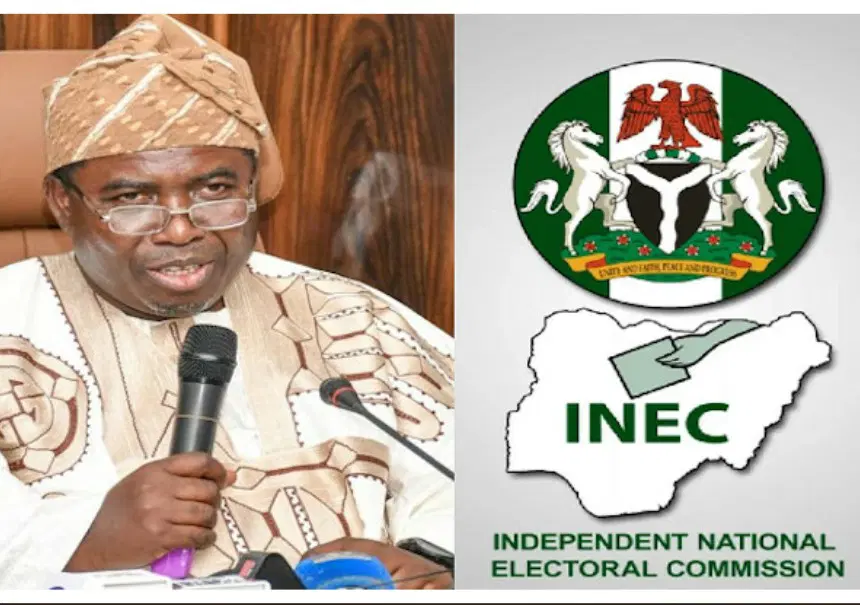
Amupitan Defends AI Use, Warns of Election Deepfakes
INEC chairman says artificial intelligence can improve voter registration, logistics and result verification but cautions that cheap voice-cloning and fabricated videos could undermine public confidence ahead of Nigeria’s 2027 elections
The Chairman of the Independent National Electoral Commission (INEC), Professor Joash Amupitan (SAN), has defended the proposed use of artificial intelligence in Nigeria’s electoral system, insisting that the technology can strengthen democratic processes despite the growing risks of digital manipulation ahead of the 2027 general elections.
Also read: ADC Accuses INEC of Sabotaging 2027 Elections
Amupitan made the remarks on Monday, November 2, 2026, at the National Summit on Electoral Information Integrity, themed ‘Beyond the Ballot: AI, FIMI, and the Integrity of Nigeria’s 2027 Elections’, held at the Continental Hotel in Abuja.
The INEC chairman said artificial intelligence was increasingly becoming an important tool for electoral management bodies worldwide, particularly in improving voter registration, identifying duplicate records, refining logistics, analysing electoral data and enhancing administrative efficiency.
He maintained that the technology should not be viewed as inherently harmful to democratic institutions, arguing that its responsible application could help electoral authorities manage increasingly complex election processes.
“Artificial Intelligence is not an enemy of democracy,” Amupitan declared.
His comments, however, came with a strong warning about the growing accessibility of generative AI tools, which he said had significantly reduced the technical expertise and financial resources previously required to produce sophisticated deceptive content.
According to him, malicious actors could now use readily available technology to clone the voices of prominent public figures, manufacture realistic videos of electoral officials making false announcements and deploy automated accounts to create the impression of widespread public outrage.
“However, the rapid democratisation of generative AI models has dramatically lowered the barrier to entry for malicious actors; capacities and capabilities that require state-level intelligence resources, such as high-fidelity voice cloning of public figures and hyper-realistic synthesis of election officials making false announcements, are now accessible at negligible cost,” he said.
Amupitan warned that such capabilities could be deployed at strategically sensitive moments during the electoral cycle, potentially confusing voters, damaging institutional credibility and disrupting the administration of elections.
The warning is particularly relevant as Nigeria approaches the 2027 general elections, when misleading digital content could affect voter perceptions, campaign activities and confidence in official electoral announcements.
In his address, Amupitan identified several stages of the electoral process that could become vulnerable to AI-generated misinformation.
Before elections, fabricated registration portals, false operational directives and manipulated claims about voter registration updates could confuse eligible voters.
During campaigns and the period immediately before polling, cloned audio recordings and manipulated videos could be released to damage candidates’ reputations or influence public opinion when opportunities for timely responses are limited.
The risks could also extend to election day and result announcements, with fabricated statements about cancelled elections, altered documents or false declarations of results potentially creating confusion and public tension.
Amupitan cited the 2023 Slovak parliamentary election as an international example of how AI-generated audio could influence the electoral information environment.
A fabricated recording purportedly involving a political party leader discussing vote-buying circulated shortly before the election, during a period when political campaigning was restricted.
He argued that Nigeria must develop systems capable of identifying and responding to such incidents quickly, rather than relying exclusively on public awareness campaigns or delayed corrections.
INEC has already announced steps towards integrating AI into its electoral operations. On October 14, Amupitan disclosed that the commission had established a dedicated AI unit within its Information and Communication Technology Directorate to monitor digital threats, detect deepfakes and strengthen electoral cybersecurity.
The unit is expected to deploy digital monitoring tools, deepfake detection software and data analytics to identify attempts to manipulate electoral information.
The commission has also discussed using AI-assisted systems to identify inconsistencies in election result sheets uploaded through its INEC Result Viewing Portal (IReV), while retaining human oversight of the collation process.
According to the chairman, the National Register of Voters contains more than 103 million records, with AI-enhanced biometric identification systems helping to identify duplicate facial and fingerprint entries.
He further explained that geospatial analytics could improve the deployment of election personnel, vehicles, boats and sensitive materials across Nigeria’s 176,846 polling units by analysing traffic conditions, weather patterns, road networks and security information.
However, Amupitan stressed that the adoption of AI must be accompanied by institutional accountability and safeguards protecting citizens’ rights.
He warned that efforts to tackle digital manipulation must not become an excuse for censorship, restrictions on legitimate political expression or interference with press freedom.
In his summit address, he called for stronger collaboration between INEC, security agencies, technology companies, media organisations, independent fact-checkers and civil society groups.
He also advocated rapid-response communication systems that would enable suspected deepfakes to be verified and official clarifications issued before fabricated information gains widespread circulation.
The summit, organised with support under the European Union Support to Democratic Governance in Nigeria III framework, was intended to develop practical strategies for protecting electoral information ahead of the 2027 polls.
Amupitan said the commission expected the discussions to produce coordinated response procedures, institutionalised fact-checking channels and practical simulations to test how relevant institutions would respond to AI-driven electoral misinformation.
His position reflects the growing challenge facing electoral authorities as technological innovation creates new opportunities for more efficient election administration while also making sophisticated digital deception easier to produce and distribute.
For Nigeria, the central issue will be ensuring that AI-assisted election management improves operational efficiency without weakening transparency, accountability and public confidence.
Also read: INEC Clears Pantami, Gwarzo but Rejects Adebutu’s Appeal
As the country approaches another major electoral cycle, the effectiveness of INEC’s proposed safeguards, the speed of its response to false information and the ability of voters to distinguish authentic announcements from fabricated content will remain important considerations.