
Lagos Targets $50bn Climate Investment, Unveils 300 Projects
Sanwo-Olu’s administration plans to attract global investors to more than 300 climate-related projects spanning renewable energy, transport, agriculture, water resources and resilient infrastructure at COP31 in Türkiye
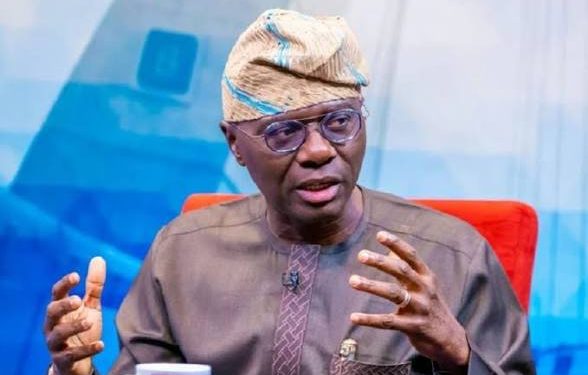
The Lagos State Government, led by Governor Babajide Sanwo-Olu, is seeking to attract between $25bn and $50bn in climate investment from international investors and strategic partners as the state prepares to showcase more than 300 potential projects at the 31st United Nations Climate Change Conference (COP31) in Antalya, Türkiye, from November 9 to 20, 2026.
Also read: Obasa Backs Hamzat to Deliver Lagos P.R.O.M.I.S.E Agenda
The ambitious investment drive is intended to mobilise private capital, strengthen infrastructure against climate-related risks, expand access to clean energy and support sustainable economic growth across Nigeria’s commercial hub.
The initiative will cover several sectors, including renewable energy, solar power, transportation, water resources, waste management, agriculture, green enterprise and climate-resilient infrastructure.
According to the state government, its participation will be coordinated by the Office of Climate Change and Circular Economy (OCCE), bringing together investment priorities from six ministries responsible for the environment and water resources, transportation, agriculture and food systems, energy and mineral resources, works and infrastructure, and waterfront infrastructure development.
A major feature of the programme will be the Lagos Climate Investment Day and Cocktail Reception on November 13, when government officials, investors, financial institutions and development partners are expected to discuss financing arrangements and explore opportunities across the state’s project pipeline.
Sanwo-Olu said the state was seeking to transform its climate ambitions into practical economic opportunities capable of improving infrastructure, creating employment and strengthening livelihoods.
“Lagos is demonstrating that climate action can be a powerful driver of economic transformation.
Our priority is to translate our climate ambitions into investment opportunities that strengthen infrastructure, expand access to clean energy, improve transportation, create jobs and improve livelihoods,” the governor said.
“At COP31, we will engage investors, financial institutions and development partners to help turn our climate investment pipeline into tangible projects and lasting economic value for Lagos and Nigeria.”
The investment strategy is anchored in Lagos State’s State-Determined Contributions (SDC) Framework, which provides a common structure for connecting climate priorities with economic development and investment opportunities.
The framework is organised around five areas: clean energy and clean cooking; blue economy, water and climate resilience; circular economy and industrial decarbonisation; climate-smart infrastructure and urban transition; and climate innovation, food systems and green enterprise.
Through these priorities, the government hopes to attract funding for projects such as flood mitigation, electricity infrastructure, sustainable transport systems, improved waste management, agricultural development and environmentally friendly businesses.
The initiative comes against the backdrop of Lagos’s growing exposure to environmental and infrastructure pressures, including recurrent flooding, coastal vulnerability, rapid urbanisation, rising energy demand and increasing volumes of municipal waste.
For a densely populated commercial centre such as Lagos, investments in drainage systems, coastal protection, renewable energy and sustainable transportation could have significant implications for public safety, economic productivity and residents’ quality of life.
However, the scale of the proposed investment pipeline also presents an important challenge. Identifying more than 300 potential projects does not automatically mean they are ready for financing or implementation.
The government will need to demonstrate the commercial viability of individual projects, establish credible financing arrangements and provide investors with sufficient clarity on regulatory requirements, revenue prospects and implementation timelines.
The distinction between projected investment opportunities and secured funding will therefore be important as Lagos presents its proposals to the international investment community.
As part of its preparations, the state has already taken steps to strengthen its climate finance framework. One of these is the Climate Finance Preparedness Clinic, which brought together more than 140 financial institutions to explore financing opportunities and improve engagement between public institutions and potential investors.
Another initiative is the Climate Defence and Catalytic Fund, launched in July 2026 to mobilise investment and reduce risks associated with climate-resilient and low-carbon infrastructure.
The fund has an ambitious target of mobilising up to $3bn annually. However, this remains a future mobilisation target rather than evidence that the amount has already been raised.
Its success will depend on the availability of capital, appropriate financing structures and the quality of projects presented for investment.
The state has also commenced distributing clean cookstoves in Makoko as part of its ambition to distribute eight million units. The initiative is intended to support cleaner cooking practices and improve access to alternative energy solutions among households.
Beyond government institutions, the Lagos delegation will include financial and private-sector organisations such as Sterling Bank, Keystone Bank, Stanbic IBTC Bank, Sun King, RF Garden and House of Tempos.
The participating banks are expected to contribute expertise in sustainable finance and financing structures for commercially viable, climate-resilient infrastructure and green projects.
Sun King, meanwhile, will showcase its experience in expanding access to solar energy, an area considered important to improving electricity access and supporting the state’s clean energy ambitions.
The Special Adviser to the Governor on Climate Change and Circular Economy, Mrs Titilayo Oshodi, said the investment framework was designed to bring different ministries and government agencies together under a coordinated programme.
“Climate action cuts across every part of Lagos’s development agenda. Through the SDC Framework, OCCE is connecting the priorities of our ministries and agencies within a common investment architecture,” Oshodi said.
She added that COP31 would provide an opportunity to present the state’s collective ambitions to international investors and strategic partners.
“COP31 provides an opportunity to present this collective ambition to investors and strategic partners and advance discussions on financing and implementing projects across energy, transportation, infrastructure, agriculture and other critical sectors that will benefit Lagos,” she said.
The planned investment showcase also builds on Lagos’s previous international climate-finance engagements, including its participation in London Climate Action Week in June 2026, where the state explored ways of connecting climate priorities with private capital and development finance.
According to The Sun, the administration is also seeking to position Lagos as Africa’s first Climate Investment Jurisdiction, a proposed approach to integrating climate policy, project development and investment mobilisation within a coordinated framework.
COP31 will run from November 9 to 20 in Antalya, Türkiye, with the World Leaders’ Summit scheduled for November 11 and 12. November 13 has also been designated as Finance and Trade Day, providing an important setting for Lagos’s planned investment engagement.
The Lagos Climate Investment Day will consequently offer the state an opportunity to move beyond announcing its climate ambitions and demonstrate how its proposed projects can attract funding and deliver measurable benefits.
Also read: Seven New Modular Refineries to Boost Nigeria’s Capacity
Ultimately, the success of the $25bn to $50bn investment ambition will be determined not by the size of the figures announced at the international conference, but by how many projects secure financing, reach implementation and improve the lives of Lagos residents.