

Adeleke Denies Secret Loans as Osun Debt Rises by $26.56m
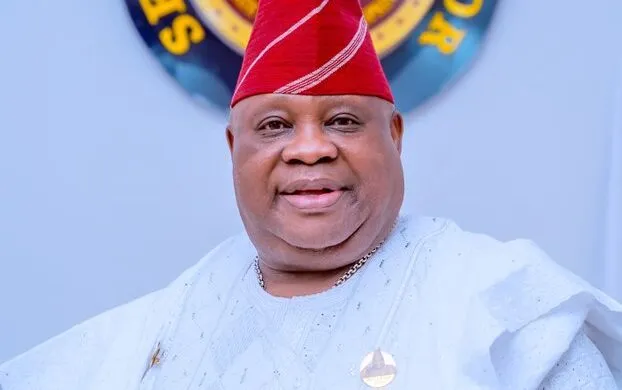
Osun State Governor Ademola Adeleke attributes the increase in the state’s external debt to inherited obligations, including a $25.8m Rural Access and Agricultural Marketing Project loan
Osun State Governor, Ademola Adeleke, has denied secretly obtaining foreign loans since assuming office, insisting that the reported increase in the state’s external debt reflects inherited financial obligations rather than fresh borrowing by his administration.
Also read: APC Unveils Tinubu’s 2027 Agenda With Bold 4-Pillar Plan
Adeleke made the clarification in Osogbo, Osun State, on Tuesday, November 10, 2026, following the publication of the state’s external debt figures by the Debt Management Office (DMO), which showed that Osun’s foreign debt increased by approximately $26.56 million between December 2024 and June 2026.
The governor’s position was contained in a statement signed by his spokesperson, Olawale Rasheed, who described allegations of secret foreign borrowing as fake news.
According to the DMO figures, Osun’s external debt stood at $101.70 million as of June 30, 2026, compared with $75.14 million recorded on December 31, 2024.
The figures represent an increase of approximately 35.4 per cent within 18 months, bringing renewed attention to the state’s borrowing record and financial management.
A breakdown of the debt profile shows that Osun’s multilateral obligations rose from $67.60 million in December 2024 to $94.15 million in June 2026.
Bilateral debt also increased slightly, moving from approximately $7.54 million to $7.55 million during the same period.
The figures indicate that almost the entire increase occurred within the multilateral debt category, although the published DMO summary does not provide a project-by-project explanation for the change.
Explaining the development, Adeleke attributed the increase largely to a $25.8 million external loan obtained by the previous administration for the Rural Access and Agricultural Marketing Project (RAAMP).
He maintained that the loan had been inherited by his administration and that its repayment obligations matured in December 2025, leading to its inclusion in the DMO’s subsequent debt figures.
According to the governor, four other similar foreign loans secured by the previous administration have also matured for repayment and could feature in subsequent updates of the state’s external debt profile.
Adeleke insisted that his administration had not obtained any external loan since taking office in November 2022, describing the position as part of its approach to sustainable financial management.
He also promised that any future borrowing by his government would be conducted openly and in accordance with established statutory requirements.
“The above clarification is necessary to set the records straight. If at all, our administration is to take loans for any reason, it will be open to the public with utmost transparency and compliance with due process,” the governor said.
He further criticised individuals accusing his administration of secretly securing foreign loans, arguing that the allegations demonstrated a misunderstanding of the statutory procedures governing external borrowing by state governments.
The development is particularly significant against the background of earlier claims by the Osun Government that the state’s debt burden had declined under Adeleke’s leadership.
In July 2025, the state government reported that Osun’s external debt had fallen from $91.78 million in December 2022 to $75.14 million in December 2024, representing a reduction of approximately $16.64 million or 18.13 per cent.
The government also reported a reduction in domestic debt from ₦148.37 billion in December 2022 to ₦83.32 billion in March 2025.
Those figures, which the government attributed to DMO records, formed part of its argument that the administration had prioritised debt reduction and improved fiscal management.
However, the latest figures show that the state’s external debt has moved in the opposite direction since December 2024, making the explanation for the increase an important issue for public scrutiny.
RAAMP, the project at the centre of the governor’s explanation, is a Federal Government initiative supported by the World Bank’s International Development Association and the French Development Agency.
The programme operates across participating Nigerian states, including Osun, with the objective of improving rural road infrastructure, agricultural market access and the sustainability of rural transport networks.
While Adeleke has attributed the increase to inherited obligations, the DMO’s published figures establish the change in the state’s outstanding external debt without independently identifying the RAAMP facility as the specific source of the additional amount.
The distinction is important because an increase in a state’s recorded debt stock does not, on its own, establish when a loan was obtained or which administration authorised the borrowing.
The governor’s explanation therefore places the focus on the history of the inherited facilities, their disbursement records and the timing of their recognition in the state’s outstanding debt profile.
For residents and other stakeholders, the central concern remains how the state manages its existing obligations while maintaining sufficient resources for infrastructure, public services and development projects.
Adeleke has maintained that his administration remains committed to transparency, promising that any decision to secure additional foreign financing would be made public and subjected to due process.
Also read: ADC Forum Threatens Nationwide Protest Against INEC
The latest clarification comes as questions over public borrowing, inherited liabilities and fiscal accountability continue to feature prominently in discussions about state government finances in Nigeria.




Pingback: Adeleke Promises Better Performance in Second Term, Assures Osun Residents – FreshUpdates News