

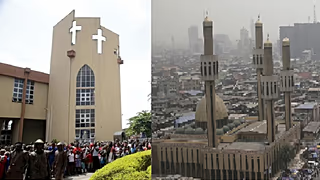
Lagos Vows More Church, Mosque Closures Over Noise Pollution
LASEPA says religious centres and entertainment businesses that breach noise limits will face sanctions, as Christian and Muslim leaders express differing views on the enforcement exercise
The Lagos State Government has vowed to shut down more churches, mosques and entertainment establishments violating environmental noise regulations, as Christian and Muslim leaders express differing positions on the enforcement exercise and the need to protect residents’ right to a peaceful environment.
Also read: Lagos Targets 95% Flood Control Success Ahead of 2027 Rains
The General Manager of the Lagos State Environmental Protection Agency (LASEPA), Dr Tunde Ajayi, said the agency would sustain its crackdown on establishments exceeding permissible noise levels, stressing that religious activities and commercial entertainment must not disrupt the wellbeing of surrounding communities.
The renewed enforcement follows the closure of The All Christians Gathering Ministry at No. 1, Ishola Street, off Clegg, Surulere, after investigations reportedly established that its activities violated environmental regulations and disturbed residents, particularly during late-night services.
Lagos State Commissioner for the Environment and Water Resources, Tokunbo Wahab, announced the closure on Sunday, following a complaint by a social media user who said the church’s activities had repeatedly disrupted his sleep.
The complainant, identified as DAVERY, had appealed to the commissioner on X in the early hours of Saturday, describing the disturbance as persistent.
“It’s 1:31 am, and I can’t sleep. They’ve started again,” the user wrote, offering to provide the church’s address privately for the authorities to investigate.
The enforcement generated considerable debate online, with some users accusing the state government of targeting churches and selectively enforcing environmental regulations.
However, Wahab rejected the allegations, pointing to the closure of Ifelodun Mosque as evidence that the exercise was not restricted to Christian places of worship.
Responding to enquiries from Sunday PUNCH, Ajayi maintained that the regulations applied equally to religious institutions, entertainment centres and other establishments using public address systems.
He said the agency would continue to investigate complaints and issue the necessary warnings before sealing facilities found to be in violation.
According to him, permissible noise levels in residential areas are 55 decibels during the day and 45 decibels at night under Lagos environmental regulations.
Ajayi added that some of the recently sealed establishments had allegedly ignored two previous warnings from the agency.
He explained that LASEPA’s enforcement process involved four stages, beginning with an abatement notice, followed by a pre-sanction notice, before the sealing of defaulting facilities and the imposition of applicable fines.
The agency also intends to enforce restrictions on the duration of external loudspeaker use for Islamic calls to prayer.
“While we understand that people are in business, particularly entertainment houses, their businesses should not disrupt the lives of other people significantly. They should not have to wake people from sleep with their noise,” Ajayi said.
He urged residents to report genuine cases of noise pollution, assuring them that complaints would be investigated before enforcement action was taken.
The government’s position has received support from several Christian and Islamic leaders, although some have called for greater engagement and alternative sanctions before places of worship are shut down.
The Chairman of the Christian Association of Nigeria in Lagos State, Bishop Stephen Adegbite, said churches must respect the rights of residents and ensure that religious activities do not become a source of disturbance to their neighbours.
He explained that CAN had consistently advised its members to regulate loudspeaker volumes, particularly during night vigils and services held in residential neighbourhoods.
“We don’t expect anybody to violate such rules and regulations because, when you are having your own service, some people may be resting,” Adegbite said.
He argued that churches operating in residential estates should not organise services that generate excessive noise throughout the night, adding that CAN would not protect religious institutions found violating environmental regulations.
Similarly, the Lagos State Chairman of the Pentecostal Fellowship of Nigeria, Pastor Yemi Davids, expressed support for the government’s efforts while urging authorities to avoid unnecessary persecution of churches.
Davids disclosed that the fellowship had been engaging the Lagos State Government through its Directorate of Intergovernmental Relations to establish a process for addressing complaints against churches.
Under the arrangement, complaints are referred to the PFN for preliminary engagement, allowing the fellowship to contact affected pastors, establish the circumstances and encourage compliance before enforcement action is taken.
“We don’t encourage noise pollution at all, and we also do not want undue persecution of churches for no reason,” he said.
He maintained that churches should receive appropriate warnings and opportunities to address violations before authorities resort to sealing their premises.
The Head of Media and Publicity of the Celestial Church of Christ Worldwide, Kayode Ajala, also supported the enforcement exercise, arguing that freedom of worship should not override the rights of other residents.
He said religious institutions must recognise the residential character of their surroundings and conduct activities without creating environmental nuisances.
Islamic leaders also expressed support for the government’s position.
The Chief Imam of Daaru Na’im Central Mosque in Lagos, Sheikh Imran Eleha, said Islamic teachings do not permit worshippers to inconvenience their neighbours under the guise of religious devotion.
He cited Islamic teachings discouraging Muslims from raising their voices during worship in ways that disturb others, stressing that religious activities should be conducted with consideration for people living nearby.
Eleha explained that external loudspeakers should primarily serve the purpose of the Adhan, the Islamic call to prayer, while other religious activities should generally rely on internal sound systems.
He also condemned midnight religious gatherings involving excessive drumming, amplified music and other activities that disturb surrounding communities.
“There is no provision in Islam that permits Muslims to inconvenience other people around them in the name of worship,” he said.
He further argued that churches organising noisy night vigils should equally face enforcement measures, insisting that environmental regulations should apply regardless of religious affiliation.
However, the National President of Jama’at Ta’awunil Muslimeen, Daood Molaasan, opposed the closure of churches and mosques, describing the measure as excessive.
Molaasan urged the Lagos State Government to consider alternative approaches, including meetings with religious leaders, stronger sensitisation and restrictions on noisy night vigils.
“We are not in support of the closures of churches or mosques because of noise pollution. The government should come up with another action instead of shutting the worship centres,” he said.
He warned that shutting down religious institutions could create unnecessary tension between the government and worshippers, suggesting that authorities should explore other ways of compelling compliance.
“The government should call the worship centres together and warn them against noise pollution. There are ways to compel them instead of shutting the worship centres,” he added.
Lagos State’s noise pollution guidelines provide for maximum levels of 55 decibels during the day and 45 decibels at night in residential areas.
The guidelines also require religious houses, clubs and entertainment establishments to operate in enclosed, soundproof environments with regulated loudspeaker use.
The Lagos State Environmental Management and Protection Law 2017 provides the broader legal framework for controlling noise in public and private places, including provisions for addressing statutory nuisances through abatement notices.
The enforcement debate therefore extends beyond the immediate closure of individual religious centres to a broader question of how Lagos can balance freedom of worship and commercial activity with residents’ rights to a peaceful and healthy environment.
While Christian and Islamic leaders largely agree that excessive noise should not be tolerated, their differing positions on the use of closure as a sanction highlight the need for consistent enforcement, transparent investigations and meaningful engagement with affected communities.
Also read: Lagos Targets 95% Flood Control Success Ahead of 2027 Rains
The Lagos State Government, through LASEPA, has maintained that no religious institution or business should be exempt from environmental regulations.



