

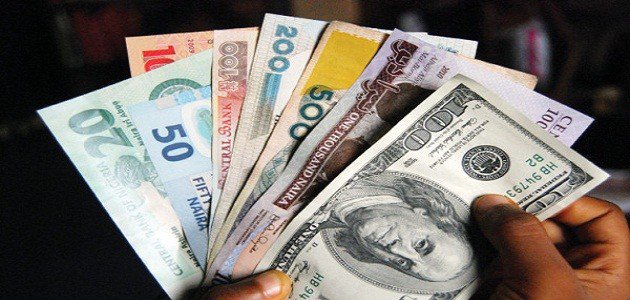
Naira Gains 6.26% Against Dollar as Reserves Hit $55.13bn
The Nigerian currency appreciated by nearly ₦90 against the US dollar in 12 months, rising to ₦1,346.79 on 6 November 2026, as foreign exchange reserves strengthened
The naira’s recovery reflects the gradual improvement in Nigeria’s foreign exchange market following a series of reforms introduced by the Central Bank of Nigeria to address market distortions, improve transparency and attract foreign capital.
Also read: FG Seeks $500m World Bank Loan Days Before Tinubu’s Exit
A comparison of the reported exchange rates shows that the currency gained approximately ₦89.95 against the dollar over the 12-month period, representing an appreciation of 6.26 per cent.
However, the latest figures also highlight the difference between the exchange rate’s longer-term performance and its day-to-day movements.
The naira traded around ₦1,346 to the dollar during the first week of November, with the official market closing at ₦1,349 on 6 November.
Central Bank Governor Olayemi Cardoso has repeatedly maintained that exchange rate stability should be achieved through market fundamentals rather than artificial intervention.
Speaking in Abuja in July 2026, Cardoso said the apex bank remained committed to a transparent and liquid foreign exchange market operating under the willing-buyer, willing-seller principle.
He said: “Our view is one of continuing on the path that we have embarked on, and that is to ensure that we have a market that is transparent, that is liquid, and one that has willing buyer, willing seller.”
Cardoso added that Nigeria required a competitive currency whose value reflected economic fundamentals, including stronger oil and non-oil exports, increased foreign direct investment, improved domestic productivity and reduced dependence on imports.
He also disclosed that daily foreign exchange market turnover sometimes exceeded $1bn, which he said reflected improvements in market activity and liquidity.
The International Monetary Fund has also acknowledged improvements in Nigeria’s external position.
In its 2026 Article IV consultation, the IMF reported that the naira appreciated by approximately 10 per cent year-on-year in March 2026, supported by stronger external balances and improved foreign exchange market conditions.
The Fund attributed the improvement in Nigeria’s external position partly to increased oil and gas exports, reduced refined petroleum imports and improved diaspora remittances.
For businesses, a stronger naira could provide some relief by reducing the domestic currency cost of imported machinery, pharmaceutical products, industrial raw materials and other foreign-sourced inputs.
Manufacturers with dollar-denominated obligations could also benefit from lower naira costs when meeting external payment commitments.
However, the benefits may not immediately translate into cheaper goods and services for consumers.
Importers may continue selling existing inventory purchased at earlier exchange rates, while transportation, electricity, financing and other domestic operating expenses could limit the extent of price reductions.
The IMF has similarly cautioned that exchange rate improvements must be supported by broader productivity gains and structural reforms to deliver sustainable economic benefits.
Meanwhile, Nigeria’s gross external reserves stood at $55.133bn on 5 November 2026, providing an important buffer for meeting international obligations and managing external financial pressures.
However, the reserves figure requires some context. Available market reporting indicated that the country’s reserves declined by approximately $106.87m to $55.13bn on the reporting date, suggesting a recent drawdown rather than continuous accumulation.
The Central Bank’s third-quarter 2026 economic bulletin had previously reported that reserves exceeded $53.8bn by the end of August, rising above $54bn in early September.
The improvement was attributed to stronger capital inflows, increased external receipts and better foreign exchange market conditions.
Nevertheless, the sustainability of the naira’s recovery will depend on Nigeria’s ability to maintain adequate foreign exchange liquidity, strengthen non-oil exports, attract long-term investment and reduce excessive dependence on imported products.
Also read: US Offers $20m Reward for Iran Nuclear Secrets
For now, the 6.26 per cent annual appreciation offers a positive indication of the currency’s performance, although continued stability will depend on the strength of the country’s external earnings and the effectiveness of monetary and fiscal policies.




Pingback: Naira Rises To ₦1,378/$ As CBN Eases Dollar Cash Restrictions – FreshUpdates News