
Alaafin Reaffirms Position as Yorubaland’s Leading Traditional Ruler
Oba Abimbola Owoade says Oyo’s historical contribution to Yoruba civilisation places the Alaafin first, while dismissing rivalry with the Ooni of Ife and promoting a cultural reunion through Oyo Empire Day
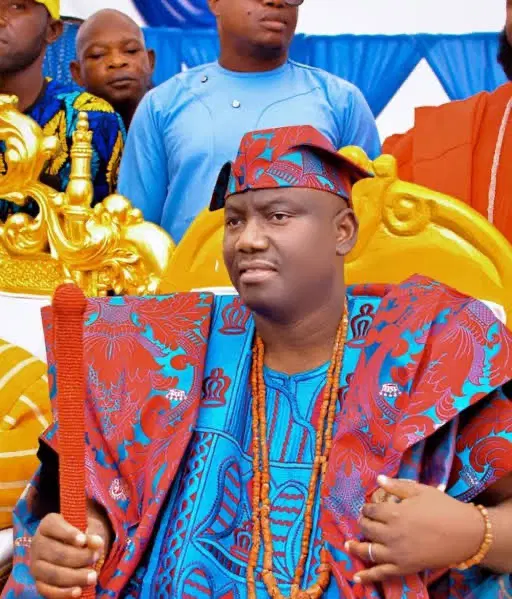
The Alaafin of Oyo, Oba Abimbola Akeem Owoade I, has reaffirmed his position as the foremost traditional ruler in Yorubaland, citing the historical influence of the old Oyo Empire and its contributions to Yoruba civilisation during an interview with Nigerian broadcaster Edmund Obilo on Friday, November 6, 2026.
Also read: 2Baba Announces New Album Release Date After Six Years
The monarch, while acknowledging the historical significance of the Alaafin’s throne, dismissed suggestions that he was engaged in a supremacy contest with the Ooni of Ife, Oba Adeyeye Enitan Ogunwusi, insisting that his position was rooted in history rather than personal rivalry.
Responding to a question about whether the Alaafin was the supreme traditional ruler in Yorubaland, Oba Owoade said the historical record supported that position.
“Historically, yes. If you want to go by history and the contribution of Oyo to Yoruba civilisation, then I would say that the Alaafin is number one,” he said.
He was equally emphatic that he had no intention of competing with other prominent Yoruba monarchs for recognition or influence.
“I don’t fight for supremacy or whatever with anybody,” the Alaafin added.
The monarch explained that his interest was in the collective progress of the Yoruba people, arguing that the development of Oyo would bring honour to the wider Yoruba community.
“I believe that when Oyo succeeds, the Yoruba in their entirety get honoured. That’s my belief,” he said.
The comments come against the backdrop of recurring disagreements over the traditional authority and historical standing of the Alaafin and Ooni’s palaces, two of the most influential institutions in Yoruba cultural life.
In August 2025, the relationship between the two monarchs attracted considerable public attention following a dispute over the conferment of the Okanlomo of Yorubaland title on Ibadan businessman and philanthropist, Chief Dotun Sanusi, by the Ooni.
The Alaafin, through his Director of Media and Publicity, Bode Durojaiye, accused the Ife monarch of exceeding his traditional authority and demanded that the title be withdrawn within 48 hours.
Oba Owoade argued that the Alaafin’s institution had exclusive authority to confer chieftaincy titles covering the entirety of Yorubaland. He also invoked what he described as a Supreme Court position on the matter.
However, the Ooni’s spokesperson, Moses Olafare, dismissed the ultimatum, saying the palace would not dignify what he described as an unworthy threat with an official response.
The exchange generated reactions from Yoruba traditional leaders, elders and cultural organisations, several of whom called for restraint and greater emphasis on unity.
Premium Times subsequently reported that the Alaafin clarified that he was not involved in a supremacy battle with the Ooni or any other traditional ruler.
The historical argument behind the Alaafin’s position is closely connected to the rise of the Oyo Empire, which became one of the most powerful political states in West Africa during the 17th and 18th centuries.
Historical scholarship published by Oxford University Press explains that Ile-Ife initially occupied a central position in Yoruba political, economic and religious life between approximately 1000 and 1500 AD.
Oyo subsequently emerged as a major imperial power, extending its influence across much of Yorubaland and neighbouring territories.
However, the historical influence of Oyo did not mean that all Yoruba kingdoms operated under one centralised political authority.
Different communities maintained their own rulers and political institutions, an important distinction in discussions about traditional supremacy.
Beyond the historical debate, Oba Owoade used the interview to discuss development initiatives and cultural preservation in Oyo.
He expressed optimism about ongoing infrastructure projects, particularly the proposed circular road and its planned dualisation, which he said would improve the city’s appearance and connectivity.
According to the monarch, the project would connect important areas, including Infinity and Sabo, while supporting the broader development of the ancient town.
He also highlighted plans for the maiden Oyo Empire Day, a three-day cultural celebration scheduled for December 17 to 19, 2026.
The Alaafin said the event was expected to attract approximately 40,000 people and would bring together communities and individuals with historical connections to the old Oyo Empire, including those living outside Nigeria.
He explained that the decision to call the celebration Oyo Empire Day rather than simply Oyo Day reflected the wider geographical and cultural reach of the former empire.
“The Oyo Empire comprises a number of people and cities, not just one.
That’s why we are trying to make sure that we come together, reconnect to our roots, preserve our culture, deliberate on how to move forward and make a better future for our children together,” he said.
A major feature of the celebration will be the establishment of a Hall of Fame to recognise individuals and communities whose contributions have helped shape Yoruba civilisation, the history of the Oyo Empire and its cultural heritage.
Oba Owoade stressed that participation would not be limited to people with direct ancestral connections to Oyo, extending an invitation to anyone interested in Yoruba culture and history.
“Everybody is invited. If you are a lover of culture, you love the way Oyo is doing its things, you are part of it. We are not excluding them,” he said.
The initiative is expected to provide an opportunity for cultural reconnection, historical reflection and renewed engagement among communities associated with the former empire.
The Alaafin’s remarks also come at a time when the relationship between traditional institutions and public governance remains a subject of discussion in Oyo State.
In January 2026, Governor Seyi Makinde inaugurated the Oyo State Council of Obas and Chiefs, appointing the Olubadan of Ibadanland, Oba Rashidi Ladoja, as its chairman.
The arrangement provides for the chairmanship to rotate among the Olubadan, Alaafin and Soun of Ogbomoso every two years.
During the interview, Oba Owoade declined to comment on whether he was unhappy with the appointment, choosing not to be drawn into the matter.
He also expressed support for calls to give traditional rulers constitutional roles in governance, arguing that their close relationship with local communities could help improve government decision-making.
Reflecting on his expectations for the throne, the monarch described himself as determined to make a positive difference through his reign.
“I am a go-getter and very resilient. I don’t give up easily. I try as much as possible to make a positive impact wherever I belong to,” he said.
His remarks suggest an effort to place cultural preservation, community development and the historical legacy of Oyo at the centre of his reign, even as conversations about the relative standing of Yoruba traditional institutions continue.
Also read: Nigerians Demand Permanent Passport Office in Manchester
For Oba Owoade, the enduring significance of the Alaafin’s throne lies not only in its historical prominence but also in the potential of Oyo’s progress to strengthen the identity and collective heritage of the Yoruba people.