

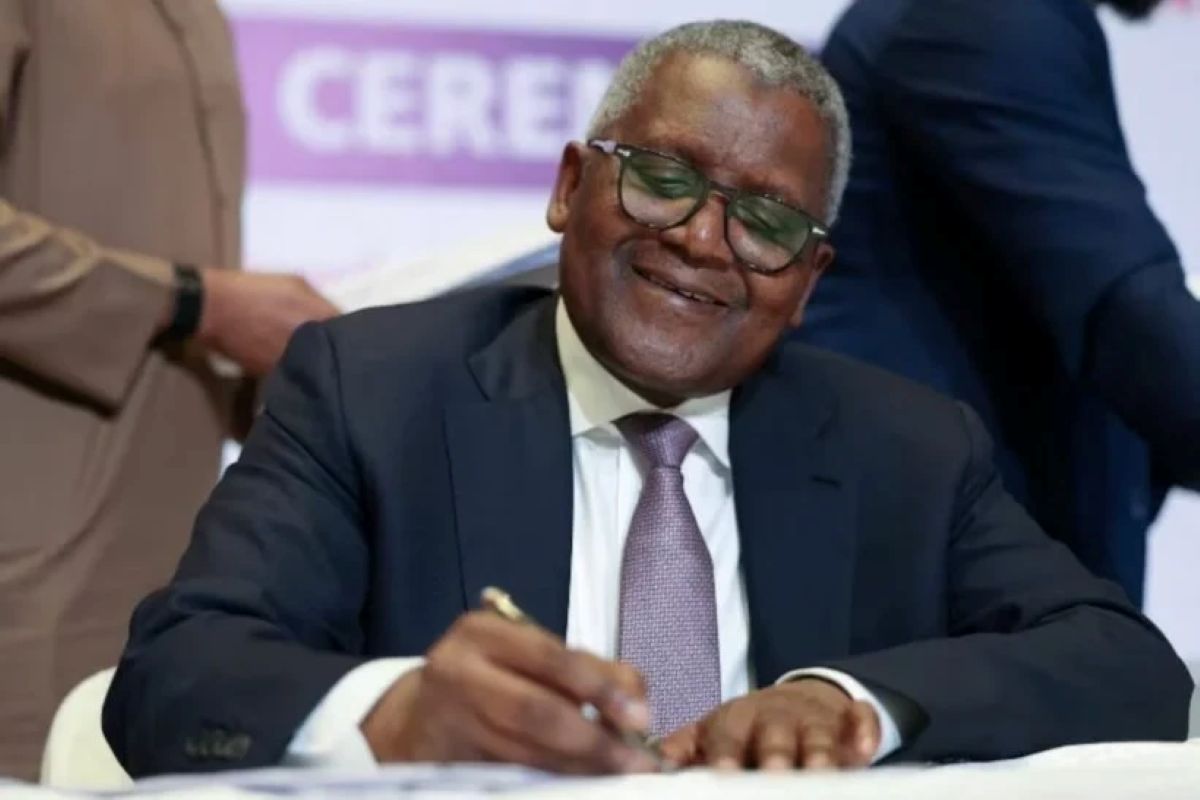
Dangote Eyes Major 500,000-Tonne Cocoa Deal in Ghana
Nigerian billionaire Aliko Dangote is negotiating with Ghana to process 500,000 metric tonnes of cocoa locally as President John Mahama’s government targets full domestic processing by 2030
Nigerian billionaire industrialist and President of Dangote Group, Aliko Dangote, is in discussions with the Ghanaian government over a proposed arrangement to process 500,000 metric tonnes of cocoa locally, in a move that could expand Ghana’s agricultural industry and strengthen its position in the global cocoa value chain.
Also read: Dangote Unveils Ambitious $70bn Africa Expansion, Targets 10,000MW Electricity
Ghana’s Finance Minister, Dr Cassiel Ato Forson, disclosed this on Thursday, November 12, 2026, during an interview on Joy News’ PM Express programme in Accra, saying Dangote had personally contacted him and President John Dramani Mahama to express interest in establishing Ghana as a major cocoa-processing hub.
According to Forson, the proposed arrangement would involve the local processing of 500,000 metric tonnes of cocoa, potentially supporting the government’s ambition to retain more economic value from one of the country’s most important agricultural commodities.
He said: “A major businessperson operating in the sub-region has reached out to me to sign a contract for 500,000 metric tonnes of cocoa value addition here in Ghana to process it locally in Ghana.
“I think it would not hurt if I mentioned Dangote has reached out to use Ghana as a hub to process cocoa locally.
“He reached out to me. He reached out to His Excellency the President. He’s ready to come to Ghana.”
However, the finance minister clarified that negotiations were still ongoing, with the parties yet to conclude the terms or sign a formal agreement.
The disclosure comes as Ghana intensifies efforts to reduce its dependence on exporting raw cocoa beans and expand domestic manufacturing through investments in processing facilities and finished products.
Presenting Ghana’s 2027 budget to Parliament on November 12, Forson announced that the government was targeting the local processing of at least 50 per cent of the country’s cocoa by 2028, with the ambition of reaching 100 per cent by 2030.
The proposed policy is designed to gradually move Ghana away from exporting unprocessed cocoa beans while encouraging investors to establish manufacturing facilities within the country.
Under the plan, domestic processing would extend beyond the traditional grinding of cocoa beans to the production of cocoa liquor, butter, cake, powder, chocolate, cosmetics and other value-added products.
Forson argued that Ghana needed to capture a greater share of the economic benefits generated by its cocoa industry rather than allow other countries to earn more from processing its agricultural produce.
He also encouraged international businesses interested in Ghanaian cocoa to invest in local processing.
“We are not saying don’t come and buy our cocoa beans, but if you are a company out there, come and buy our cocoa beans, but add value here in Ghana,” the minister said.
The government’s ambition is backed by a proposed legislative framework through a new Cocoa Board Act, which is expected to establish requirements for increasing local processing.
Forson indicated that a legislative instrument would provide the timetable for moving from the initial 50 per cent target in 2028 to full domestic processing by 2030.
The proposed Dangote arrangement could therefore become an important part of Ghana’s strategy, although its precise contribution will depend on the final terms of the agreement.
Ghana’s processing capacity and investment ambitions
Despite being one of the world’s leading cocoa-producing countries, Ghana has historically exported a significant proportion of its cocoa beans in raw form, limiting the amount of manufacturing value retained within its economy.
Data from the United States Department of Agriculture’s Foreign Agricultural Service indicates that Ghana has an installed domestic cocoa-grinding capacity of approximately 504,780 metric tonnes.
However, many local processors have reportedly operated at 50 per cent or below their installed capacity, largely because of insufficient and inconsistent supplies of cocoa beans.
The USDA projected Ghana’s domestic cocoa grindings at approximately 300,000 metric tonnes for the 2025/2026 season, reflecting an expected increase in available supplies.
This presents an important consideration for the proposed Dangote arrangement. Although Ghana already has substantial processing infrastructure, expanding actual production will require reliable cocoa supplies, financing, energy and efficient logistics.
If the proposed 500,000-tonne arrangement represents annual processing capacity, it would be comparable to almost the entirety of Ghana’s existing installed grinding capacity.
However, neither Forson nor the available details of the proposal have established whether the 500,000 tonnes represents annual processing, a one-off commitment or a longer-term volume.
The Ghanaian government is also pursuing a broader economic transformation programme between 2027 and 2030.
According to the Ghana News Agency, the programme is expected to attract $10 billion in investments, with commercial agriculture allocated $3 billion to develop eight priority agricultural value chains, including cocoa, rice, sugar, poultry, maize, soya, aquaculture, oil palm and vegetables.
The initiative is intended to improve agricultural productivity, strengthen local industries, create employment and reduce the country’s dependence on imported food and agricultural products.
Dangote’s expanding industrial footprint in Africa
The proposed Ghana cocoa investment would extend Dangote’s industrial interests into another major agricultural value chain in West Africa.
Dangote, founder and president of Dangote Group, has built a business empire spanning cement, sugar, fertiliser, food processing and oil refining.
His business journey began with commodity trading, including rice, sugar and cement, before he expanded into large-scale manufacturing and industrial investments.
One of his most significant projects is the Dangote Petroleum Refinery in Lagos, which commenced operations in 2024 and has become a major part of Nigeria’s domestic petroleum refining industry.
His conglomerate also operates Dangote Cement across several African countries and has continued to pursue investments in fertiliser production and agricultural development beyond Nigeria.
Dangote is ranked Africa’s richest man by Forbes, reflecting the scale of his business interests and investments across the continent.
Although the Ghanaian government has confirmed discussions over the cocoa proposal, Dangote Group had not publicly announced a signed agreement as of November 14, 2026.
The proposed deal nevertheless highlights the growing interest in agricultural value addition across Africa, as governments seek to move beyond exporting raw commodities towards developing industries capable of producing finished goods.
Also read: Dangote Eyes Egypt Expansion in Major African Boost
For Ghana, the central challenge will be translating its ambitious processing targets into sustainable industrial capacity, reliable raw material supplies and tangible economic opportunities for farmers, manufacturers and workers.




Pingback: UK Imports £1bn Nigerian Refined Fuel as Dangote Boosts Exports – FreshUpdates News