

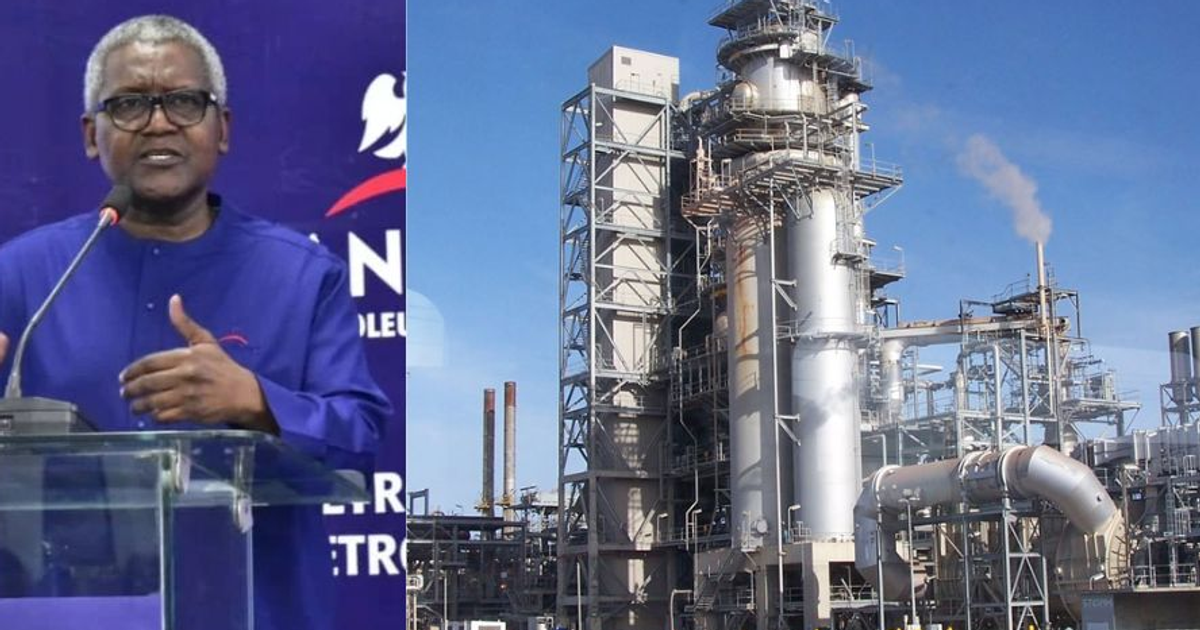
UK Imports £1bn Nigerian Refined Fuel as Dangote Boosts Exports
Refined petroleum products overtook crude oil as Nigeria’s biggest goods export to Britain, while the UK’s fuel exports to Nigeria fell by 42.7 per cent
The United Kingdom imported £1.017bn worth of refined petroleum products from Nigeria in the 12 months to June 2026, highlighting a major shift in bilateral energy trade as the Dangote Petroleum Refinery strengthens the country’s position in the international fuel market.
Also read: Dangote Eyes Major 500,000-Tonne Cocoa Deal in Ghana
The figure was contained in the UK government’s latest Trade and Investment Factsheet, released on November 6, 2026.
It showed that refined petroleum products accounted for 53.5 per cent of Britain’s total merchandise imports from Nigeria during the period.
The value of refined oil imports increased by more than 100 per cent compared with the corresponding 12 months to June 2025, making the commodity the largest category of Nigerian goods purchased by the UK.
The development represents a notable change in the composition of Nigeria’s petroleum exports, with processed fuel overtaking crude oil as the leading category of goods supplied to Britain.
Crude oil imports from Nigeria fell by 56.2 per cent to £550.3m, accounting for 28.9 per cent of Britain’s merchandise imports from the country.
The figures mean refined petroleum products were worth almost twice as much as crude oil in the UK’s imports from Nigeria during the period.
Other Nigerian goods purchased by Britain included natural gas valued at £179.5m, representing 9.4 per cent of imports, while coffee, tea and cocoa products accounted for £40.3m.
The figures come amid the expansion of the Dangote Petroleum Refinery in Lagos, which began operations in January 2024 and has increasingly supplied petroleum products to domestic and international markets.
Although the facility was initially designed with a nameplate capacity of 650,000 barrels per day, the US Energy Information Administration (EIA) reported that maintenance and expansion work completed in February 2026 increased its crude oil distillation capacity to 700,000 barrels per day.
In an August 24 report, the EIA said Nigeria’s seaborne petroleum product exports had increased sevenfold since 2023, with the Dangote refinery playing a major role in the growth.
According to the agency, Nigeria exported an average of 350,000 barrels of petroleum products daily by sea in the second quarter of 2026, compared with an annual average of 46,000 barrels per day in 2023.
Total seaborne petroleum product shipments, including deliveries between Nigerian ports, averaged 561,000 barrels per day during the second quarter, up from an annual average of 79,000 barrels per day in 2023.
The EIA attributed the growth to increased domestic refining capacity, which helped reduce imports, expand exports and improve Nigeria’s self-sufficiency in refined petroleum products.
“With the increased supply of petroleum products in Nigeria from the country’s largest refinery, imports fell, exports increased, and Nigeria became more self-sufficient in refined petroleum products,” the agency said.
Nigeria’s petroleum product exports to Europe averaged 130,000 barrels per day in the second quarter of 2026, compared with 40,000 barrels per day in 2025 and 15,000 barrels per day in 2023.
Exports to other African countries also increased, reaching nearly 120,000 barrels per day, up from 89,000 barrels per day in 2025.
The changing trade pattern is also reflected in Britain’s petroleum exports to Nigeria, which declined during the same period.
The UK exported £772.3m worth of refined petroleum products to Nigeria in the 12 months to June 2026, representing 51.5 per cent of its total merchandise exports to the country.
However, the value represented a 42.7 per cent decline from the corresponding period a year earlier, when British refined oil exports to Nigeria were estimated at approximately £1.35bn.
The difference between Nigeria’s refined petroleum exports to Britain and Britain’s fuel exports to Nigeria amounted to approximately £245m in Nigeria’s favour.
The reversal is significant for Nigeria, which historically relied heavily on imported petrol, diesel and other refined products despite being one of Africa’s leading crude oil producers.
However, the figures do not mean Nigeria recorded an overall trade surplus with Britain.
The UK government’s broader statistics showed that Britain maintained a £2.2bn surplus in total trade in goods and services with Nigeria during the period, largely because of its strong services trade.
In merchandise trade alone, however, the UK recorded a £404m deficit with Nigeria, compared with a £299m surplus in the corresponding period a year earlier.
The UK government also cautioned that its trade figures were reported in current prices, meaning they were not adjusted for inflation or exchange-rate changes.
The EIA said the Dangote Group planned to further expand the refinery by adding a second crude oil distillation unit with a capacity of 750,000 barrels per day by 2028.
Also read: Dangote Unveils Ambitious $70bn Africa Expansion, Targets 10,000MW Electricity
If completed, the proposed expansion would significantly increase Nigeria’s refining capacity and potentially strengthen its position as a major supplier of petroleum products to Europe and other African markets.




Pingback: Nigeria Inflation Drops to 14.06% in October Despite Rising Monthly Prices – FreshUpdates News
Pingback: Dangote Unveils Africa’s First Locally Assembled Electric Truck – FreshUpdates News
Pingback: Oando Seeks ₦203.8bn From Shareholders to Fund Oil Operations – FreshUpdates News