

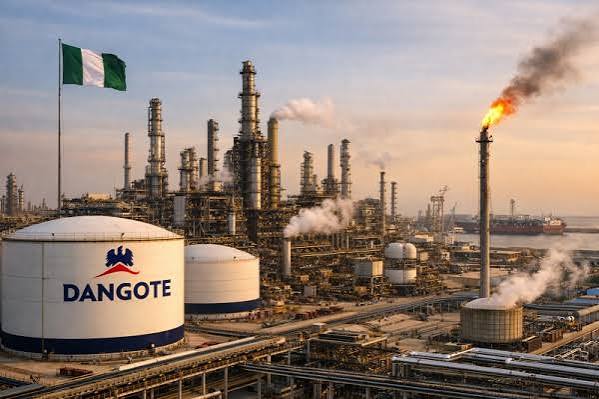
Dangote Unveils Ambitious $70bn Africa Expansion, Targets 10,000MW Electricity
The industrialist raises his Vision 2030 investment target from $50 billion to $70 billion, with plans for a major electricity generation programme to support businesses and industrial development across Africa
President and Chief Executive of Dangote Industries Limited, Aliko Dangote, has announced plans to raise his group’s investment ambition across Africa to approximately $70 billion by 2030, alongside a proposed 10,000-megawatt electricity generation programme, during an engagement with Northern Nigerian creative industry stakeholders at the Dangote Petroleum Refinery and Petrochemicals complex in Lekki, Lagos, on Thursday, November 12, 2026.
Also read: Dangote Eyes Egypt Expansion in Major African Boost
The industrialist said the expanded investment programme, which forms part of the group’s Vision 2030, would focus on industrial expansion, electricity generation, manufacturing and job creation, with the aim of addressing some of the infrastructure challenges limiting economic growth across the continent.
Dangote disclosed that the revised investment ambition represented an increase from the initial $50 billion target, reflecting the group’s growing interest in infrastructure and productive sectors.
“We initially planned to invest $50 billion. We are now looking at increasing that to about $70 billion in Africa,” he said.
A major component of the proposed expansion is a 10,000MW electricity generation programme that could cover several African countries, potentially including Nigeria.
Dangote explained that the initiative would operate separately from the electricity generated for the group’s existing industrial facilities, which currently have almost 1,500MW of captive power capacity.
He said the group’s internal generating capacity could increase to between 4,500MW and 5,000MW by the completion of Vision 2030.
“That is captive power, electricity for our own operations. Separately, part of the vision is to intervene in power generation with 10,000 megawatts across Africa, potentially including Nigeria,” he said.
The proposed intervention comes against the backdrop of persistent electricity supply challenges across Nigeria, where inadequate and unreliable power has continued to increase operating costs for manufacturers, commercial establishments and smaller businesses.
Dangote identified electricity as one of the most important factors determining whether small and medium-sized enterprises (SMEs) can survive and expand.
He argued that businesses relying heavily on petrol and diesel generators face high operating expenses that make it difficult to remain competitive, particularly in an economy where access to affordable financing and infrastructure remains limited.
“Installing solar power for yourself does not mean the wider problem has been solved. Other people may not have that option,” he said.
He added that the country’s economic recovery would depend significantly on creating an environment where smaller businesses could operate without bearing excessive electricity costs.
“A vibrant economy is driven by small and medium-sized enterprises. Large companies such as ours help sustain those businesses, but SMEs are essential to economic activity. When you generate electricity using diesel or petrol, it becomes very difficult to make money,” Dangote said.
The industrialist also called on the government to prioritise policies that encourage private-sector investment, arguing that businesses could create employment and stimulate economic activity when operating conditions were supportive.
“Government’s principal responsibility is to create an enabling environment through good policies. With the right policies, businesses can invest and create jobs,” he said.
Dangote expressed confidence in Nigeria’s entrepreneurial potential, particularly in agriculture and solid minerals, which he identified as sectors capable of creating substantial economic opportunities in Northern Nigeria.
However, he cautioned against the country’s continued dependence on exporting raw materials, arguing that greater investment in local processing and manufacturing would help retain more economic value within Africa.
“It is not only about us; it is about Nigeria and the African continent.
We should not simply export raw materials and then buy back the processed products at many times the price. That is the pattern we want to change,” he said.
He also identified infrastructure, including ports and transportation networks, as important components of the continent’s industrial development, noting that improved logistics would make it easier for producers to access domestic and international markets.
Dangote’s expanding investment ambition
The latest announcement represents a further increase in Dangote’s continental investment ambitions.
On November 4, 2026, Dangote raised the group’s original $50 billion Africa investment target to $60 billion during the groundbreaking ceremony for a $2.5 billion fuel storage and pipeline project near Walvis Bay, Namibia.
The project includes plans for a fuel storage facility with approximately 600 million litres, equivalent to four million barrels, of capacity and a proposed 1,700-kilometre pipeline connecting markets in Southern Africa.
The latest $70 billion target therefore represents another $10 billion increase within just over a week, underlining the scale of the group’s continental expansion ambitions.
Dangote has also previously outlined plans to invest more than $10 billion in Africa’s power sector over the next three to four years, identifying electricity shortages as a major obstacle to industrial development.
Nigeria’s electricity challenges provide an important context for the proposed intervention. According to the International Energy Agency’s Electricity 2026 report, the country had installed generation capacity of 13.6 gigawatts, but average available generation was only 5.4 gigawatts in the first half of 2025.
The difference highlights the challenge of converting installed capacity into dependable electricity supply for households and businesses.
Lessons for entrepreneurs
Beyond the investment announcement, Dangote used the engagement with the Northern Nigerian creative industry delegation to share lessons from his business journey.
He attributed the expansion of his conglomerate to discipline, focus and the consistent reinvestment of profits, explaining that the transition from trading to manufacturing was built around products the group already understood.
According to him, established customers, distribution networks and market knowledge provided a foundation for moving into manufacturing and backward integration.
“The logical next step was backward integration: producing the things we were already importing,” he said.
He also advised entrepreneurs to exercise financial discipline and avoid spending profits before they materialised.
Dangote stressed that business owners must be prepared to abandon ventures that consistently fail to make commercial sense, regardless of the resources already invested.
“Give it your best effort, but when you do the numbers and they are not adding up, you must be willing to leave,” he advised.
He encouraged smaller businesses to identify opportunities within major industrial investments, particularly as large companies expand their operations across the continent.
“People like us will continue investing. People like you can build businesses around those investments, as suppliers, producers and service providers,” he said.
However, the proposed 10,000MW programme remains a continental ambition rather than a fully detailed project announcement.
Specific locations, financing arrangements, construction timelines and the allocation of generating capacity among participating countries have not yet been publicly established.
The success of the initiative will therefore depend not only on the scale of the investment but also on implementation, regulatory cooperation and the ability to deliver electricity to businesses and communities.
Also read: NNPC Moves to Sell 10% Stake, Targets London, New York Stock Markets
For Dangote, the broader objective is to move Africa towards an economy driven by local production, industrial capacity and reliable infrastructure rather than dependence on imported finished goods.




Pingback: N630bn Power Debt: Stakeholders Warn Nigeria’s Electricity Crisis May Deepen – FreshUpdates News
Pingback: Dangote Eyes Major 500,000-Tonne Cocoa Deal in Ghana – FreshUpdates News
Pingback: UK Imports £1bn Nigerian Refined Fuel as Dangote Boosts Exports – FreshUpdates News