

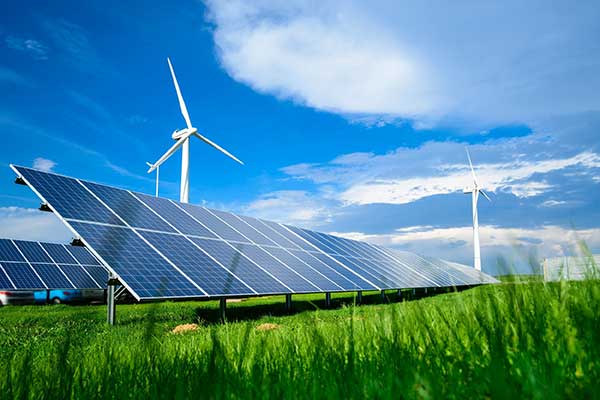
Nigeria Targets $8.5bn Solar Boom as Experts Push Local Manufacturing
Experts at COP31 urge Nigeria to harness its mineral resources, develop local solar manufacturing and tap West Africa’s electricity deficit to create jobs and attract billions of dollars in investment
Nigeria could unlock billions of dollars in investment and establish itself as a major solar manufacturing hub in West Africa, as energy and climate experts call for a shift from importing renewable energy technologies to producing them locally.
Also read: FG Seeks Fresh $500m World Bank Loan as Power Crisis Persists
The experts, including Michael David, Executive Director of the Global Initiative for Food Security and Ecosystem Preservation; Olamide Fagbuji, Senior Special Assistant to President Bola Tinubu on Climate Technologies; and Gloria Bulus, Executive Director of Bridge That Gap Initiative, made the call at the Nigerian Pavilion during the 31st United Nations Climate Change Conference (COP31) in Antalya, Türkiye, on Tuesday, November 17, 2026.
At a discussion themed ‘Just Transition: Unlocking Nigeria’s Solar Opportunities’, the speakers identified Nigeria’s mineral resources, the growing demand for alternative electricity and West Africa’s substantial energy access deficit as major opportunities for developing a competitive domestic solar industry.
They argued that Nigeria must look beyond importing solar panels and invest in local manufacturing, mineral processing, battery production and assembly facilities to capture more economic value from the global transition to clean energy.
The experts also identified solar-powered agriculture, irrigation, cold storage and agro-processing as promising areas for investment, particularly in rural communities where unreliable electricity continues to constrain economic activities.
Speaking during a presentation, David said Nigeria had the natural resources and market potential to build a strong solar manufacturing industry but was losing significant economic opportunities through its dependence on imported technologies.
He identified 12 minerals that could support different stages of solar panel and battery production, including silica, lithium, copper, aluminium, iron ore, graphite, manganese, nickel, cobalt, tin, zinc and silver.
According to him, the minerals are available in several Nigerian states, including Nasarawa, Kogi, Kwara, Niger, Zamfara, Plateau, Bauchi, Ondo and Osun.
David maintained that developing the country’s mineral resources into industrial inputs would create opportunities across the renewable energy value chain, from extraction and processing to manufacturing, distribution and exports.
“Solar energy is not just an opportunity. It is industrialisation. It is investment. It is an economic transformation opportunity for Nigeria. The opportunity goes beyond just deploying solar panels,” he said.
He disclosed that Nigeria imported approximately 2.9 million solar panels in 2025, spending more than N450bn, despite possessing some of the raw materials required for domestic production.
According to him, investing in local production would reduce dependence on foreign suppliers, create employment and enable Nigerian businesses to compete more effectively in the regional renewable energy market.
The opportunity, he said, extends beyond Nigeria’s domestic market to neighbouring West African countries facing persistent electricity shortages.
David cited figures indicating that West Africa accounted for approximately 33 per cent of the 565 million people without electricity access in sub-Saharan Africa in 2023, representing about 185 million people.
He argued that the scale of the deficit provided a substantial market for Nigerian manufacturers capable of supplying affordable solar technologies across the region.
“The entire sub-Saharan Africa has a population of about 565 million people. And out of this number, within West Africa, we are looking at nearly 33 per cent of that. That is a huge market,” he said.
The investment prospects are also supported by findings from the International Finance Corporation (IFC), which estimated that Nigeria’s commercially viable solar power market could attract up to $8.5bn in investment by 2030.
The IFC’s 2025 Nigeria Country Private Sector Diagnostic identified opportunities across commercial and industrial solar installations, utility-enabled solar and grid-connected projects.
The report also estimated that developing the sector could create up to 365,000 jobs, provided the government addresses regulatory and investment barriers.
Beyond the immediate solar market, broader distributed renewable energy opportunities could exceed $18bn over the next decade, according to estimates cited during the discussion.
A separate analysis by the Rocky Mountain Institute and the Global Energy Alliance for People and Planet also identified an investment opportunity exceeding $18bn over ten years in distributed energy resources and associated distribution network upgrades across Nigeria.
On the government’s position, Fagbuji said the Federal Government was working to establish a policy environment capable of attracting private investment and accelerating the adoption of renewable energy.
He identified the Electricity Act 2023 as an important policy development because it allows states to participate more actively in electricity generation, transmission and distribution within their jurisdictions.
The legislation has created opportunities for decentralised electricity markets, allowing state governments and private investors to develop solutions suited to local energy needs.
Fagbuji also highlighted Nigeria’s Third Nationally Determined Contribution (NDC 3.0), which sets a target of achieving a 50 per cent renewable energy share in the electricity generation mix by 2030.
The climate commitment also targets universal electricity access by 2030 and a nine per cent annual pace of new electricity connections.
However, achieving these objectives will require substantial investment, effective implementation of existing policies and stronger collaboration between the government and private sector.
Despite the enormous investment potential, the experts acknowledged that affordability remained a major obstacle to ensuring that ordinary Nigerians benefit from the energy transition.
Bulus said the high upfront cost of installing solar systems continued to prevent low-income households and underserved communities from adopting the technology.
She explained that while conventional electricity consumers generally pay for power as they use it, solar installations often require substantial initial expenditure on panels, batteries, inverters and other components.
“For communities, it is not about the accessibility of solar panels. It is not about the solar itself. It is about the affordability of those panels and even the battery,” she said.
Her intervention highlighted an important challenge for Nigeria’s renewable energy ambitions: expanding the market will mean little if the households and communities most affected by unreliable electricity cannot afford the available solutions.
The issue also reinforces the need for accessible financing arrangements, including flexible payment systems and innovative funding models that allow low-income consumers to spread installation costs over time.
Beyond financing, the experts called for stronger product standards, improved quality assurance and technical skills development to support the expansion of the domestic solar industry.
These measures would help protect consumers from substandard equipment, improve confidence in locally manufactured products and develop the skilled workforce required to sustain the sector.
The discussion formed part of COP31 activities in Türkiye, where governments, businesses and civil society organisations are considering practical approaches to accelerating climate action, clean energy investment and inclusive economic development.
COP31, which runs from November 9 to 20, 2026, provides a platform for countries to advance climate commitments and explore solutions that connect environmental sustainability with economic growth, job creation and energy security.
For Nigeria, the opportunity extends beyond increasing the number of solar installations.
Developing a domestic manufacturing industry could create jobs, strengthen industrial capacity, support agricultural productivity and position the country as a supplier of renewable energy technologies to the wider West African market.
Also read: TRCN Uncovers 250 Fake Teaching Certificates in Nigeria
However, translating the opportunity into measurable economic benefits will depend on whether the government and private investors can address financing constraints, strengthen local production capacity and make clean energy technologies affordable for the communities that need them most.



