

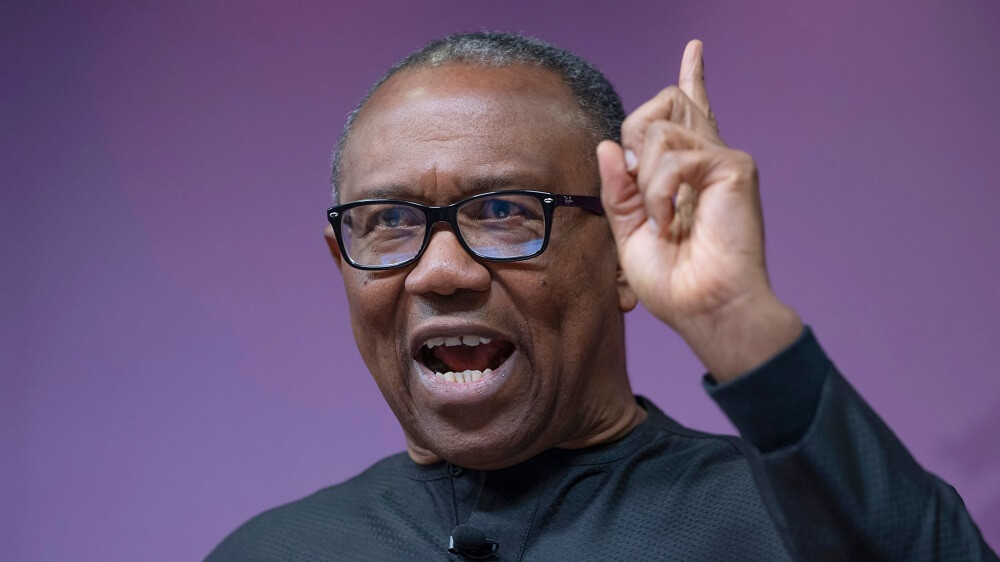
Obi Defends Kwankwasiyya Supporters Amid Deadly Attacks
The NDC presidential candidate says supporters of Rabiu Kwankwaso have not used their traditional campaign sticks to hurt anyone, as deadly attacks on opposition political gatherings raise fresh concerns ahead of the 2027 elections
Presidential candidate of the Nigeria Democratic Congress (NDC), Peter Obi, has defended supporters of his running mate, Rabiu Musa Kwankwaso, over their practice of carrying sticks to political gatherings, insisting that he has not witnessed the items being used to harm anyone.
Also read: Obi Promises 10,000 Health Centres, 40,000 School Blocks Ahead of 2027
Obi made the remarks on Tuesday, November 24, 2026, during an interview with Channels Television in Jalingo, Taraba State, after an Obi-Kwankwaso town hall meeting at The Crest Hall.
The former Anambra State governor’s comments came amid heightened concerns over political violence ahead of Nigeria’s 2027 general elections, following attacks on opposition campaign activities in Kano and Delta states.
Addressing questions about the presence of sticks among Kwankwaso’s supporters, Obi explained that carrying such items had been a longstanding feature of the Kwankwasiyya movement in Kano, rather than evidence of an intention to attack political opponents.
He maintained that he had been associated with the movement for some time and had not personally witnessed anyone being assaulted because supporters carried the sticks.
“Everybody who had followed the Kwankwansiyah group in Kano know that they come out with such sticks and everything, but they’ve never used it to harm anybody,” Obi said.
“I’ve been part of that family for a while, and I’ve never seen one day, maybe behind me, that anybody was harmed because they were carrying such items.”
The NDC presidential candidate also sought to distinguish political mobilisation from electoral malpractice, arguing that Nigerians wanted to participate in campaigns without fear of intimidation or violence.
Responding to concerns surrounding political slogans and calls against election rigging, Obi said opposition to electoral manipulation should not be interpreted as hostility towards political campaigns.
“They said we said ‘rig and die’. We didn’t say ‘campaign and die’. What we, people said is that they don’t want rigging this time. They didn’t say they don’t want campaign this time.
If anything, they want campaign this time,” he stated.
He appealed to security agencies and political authorities to protect Nigerians during political activities, warning that the pursuit of public office should never come at the expense of human lives.
“So we’re pleading with the authorities. Please, we cannot kill people, harm people, because we want to be political leaders,” he added.
The remarks followed a deadly attack on Monday, November 23, when gunmen disrupted a campaign gathering organised for the NDC senatorial candidate for Delta Central, Senator Ovie Omo-Agege, in Uduere community, Ughelli North Local Government Area of Delta State.
Omo-Agege, a former Deputy President of the Senate, reportedly escaped unhurt, but several members of his campaign team and supporters were killed or injured.
The Nigeria Police Force subsequently confirmed that six people had died, revising the initial figure of four announced by Omo-Agege’s campaign organisation.
Force Public Relations Officer, CSP Ani Iniedu, said the Inspector-General of Police, Olatunji Disu, had ordered a thorough and impartial investigation to establish the circumstances surrounding the shooting, identify those responsible and examine the conduct of police officers deployed to the venue.
The police also warned that officers found to have acted negligently or violated professional standards would face disciplinary action.
The Delta State Police Command has also invited Omo-Agege, Ughelli North Local Government Chairman Jaro Egbo and five other individuals for questioning as part of its investigation.
The development followed conflicting accusations over the circumstances of the attack, with Omo-Agege’s camp alleging an assassination attempt, while Egbo denied responsibility and called for an investigation.
The Delta State Government also imposed a dusk-to-dawn curfew across Ughelli North Local Government Area following the violence.
The Delta incident came barely eight days after another reported attack involving Kwankwaso’s convoy in Bichi Local Government Area of Kano State.
The November 15 incident reportedly occurred during a political mobilisation tour involving Kwankwaso and the NDC governorship candidate in Kano, Aminu Abdussalam Gwarzo.
Ibrahim Garba Shuaibu, spokesperson for Gwarzo’s campaign, alleged that armed youths attacked the convoy, injuring some supporters and damaging several vehicles, including about seven with smashed windscreens.
However, Kano State Commissioner for Information, Sanusi Bature Dawakin Tofa, dismissed the reported attack as fictitious, accusing the Kwankwasiyya movement of attempting to generate public sympathy.
The competing accounts highlighted the need for independent investigations rather than treating allegations surrounding political violence as established facts.
Obi had condemned the reported Kano incident, maintaining that political disagreements should be resolved through democratic engagement rather than violence.
His latest comments therefore come at a sensitive moment for the NDC, whose presidential and vice-presidential candidates have been travelling across the country to engage supporters and mobilise voters ahead of the 2027 elections.
The Jalingo town hall meeting formed part of that nationwide engagement, providing an opportunity for Obi and Kwankwaso to interact with residents and discuss their political ambitions.
While Obi defended the Kwankwasiyya movement’s traditional campaign practices, his appeal for peaceful political participation also places responsibility on political parties, supporters and security agencies to ensure that campaign activities remain free from intimidation and violence.
With the 2027 elections approaching, the growing number of security concerns surrounding political gatherings presents a serious challenge for Nigeria’s democratic process.
Also read: Peter Obi Alleges NFF Blocked Flamingos Welcome at Airport
Ultimately, the distinction between peaceful political symbolism and intimidation must be respected, while no political movement should be exempt from established laws governing public safety and the possession or use of dangerous objects.



