

Tinubu Cuts 2026 Budget by ₦3.15tn, Retains Deficit
The President has proposed reducing federal expenditure from ₦68.32 trillion to ₦65.18 trillion, but retained the ₦31.46 trillion deficit and ₦29.22 trillion borrowing plan
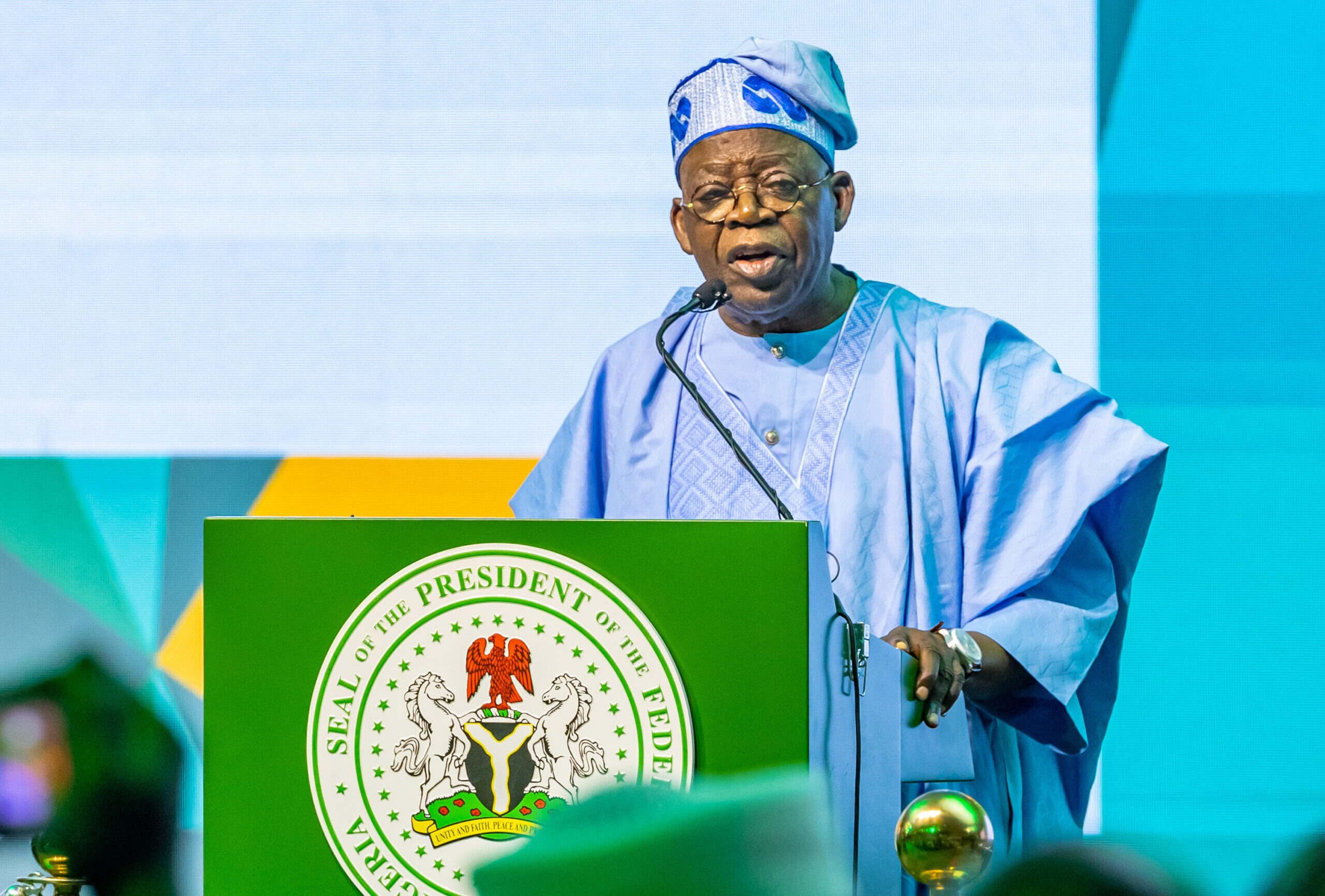
President Bola Ahmed Tinubu has asked the National Assembly to approve a ₦3.15 trillion reduction in Nigeria’s 2026 federal budget, bringing total proposed expenditure down from ₦68.323 trillion to ₦65.176 trillion, while retaining the ₦31.457 trillion fiscal deficit.
Also read: Tinubu Approves N250m Aid as Bayelsa Boat Deaths Hit 29
The President’s proposal was contained in a letter dated November 20, 2026, addressed to Speaker of the House of Representatives, Tajudeen Abbas, and read during plenary in Abuja on Tuesday, November 24.
Tinubu also forwarded a revised 2026 Federal Government Fiscal Framework, explaining that the proposed changes were intended to align government spending with existing financial obligations and available resources.
The adjustment represents a reduction of approximately 4.6 per cent in the original budget, although the government’s deficit and borrowing projections remain unchanged.
Under the revised framework, projected Federal Government revenue, including receipts from Government-Owned Enterprises (GOEs), stands at ₦33.720 trillion, while aggregate capital expenditure is estimated at ₦26.232 trillion.
The President explained that the proposed repeal and re-enactment of the Appropriation Act would address outstanding financial obligations, regularise certain expenditures and improve the implementation of government projects.
According to the letter, the revision would regularise expenditures incurred by the Nigerian National Petroleum Company Limited (NNPCL) on behalf of the Federation, address previously underprovided debt-service obligations, recognise issued capital warrants and supplementation commitments, and provide for refunds to Ministries, Departments and Agencies (MDAs) and special accounts.
Tinubu said most of the capital allocations for MDAs represented amounts already warranted, while a limited number of new capital and overhead provisions had been introduced to accommodate priority national interventions.
He identified the completion of critical road projects, protection of agricultural production, reduction of production costs, improvement of farm yields and better market access as areas requiring additional attention.
The revised framework also provides for interventions to address water vulnerability, alongside measures aimed at improving agricultural productivity and supporting economic activities.
In his explanation, Tinubu said the adjustments were designed to prioritise existing commitments, strengthen the credibility of the capital budget and ensure more orderly implementation of government expenditure.
He stated: “Under the revised framework, aggregate expenditure is N65.176tn, compared with N68.323tn in the approved budget, while projected FGN revenue, including Government-Owned Enterprises, is N33.720tn. Aggregate capital expenditure is N26.232tn.
“The fiscal deficit, including project-tied loans, remains unchanged at N31.457tn, equivalent to 5.64 per cent of GDP. These adjustments prioritise existing commitments and improve the credibility and execution of the capital budget while maintaining fiscal restraint.”
Despite the proposed reduction in expenditure, the Federal Government has retained its ₦31.457 trillion fiscal deficit, representing 5.64 per cent of Gross Domestic Product.
The proposed new borrowing also remains at approximately ₦29.218 trillion, comprising ₦18.428 trillion in domestic borrowing and ₦10.790 trillion in external borrowing.
The President explained that the proposed $7.7 billion external loan, estimated at ₦10.368 trillion using an exchange rate of ₦1,346.50 to the dollar, would finance the existing foreign borrowing provision rather than expand the government’s overall borrowing envelope.
The decision to maintain the deficit and borrowing projections means that the proposed reduction in total expenditure does not translate into a corresponding reduction in the government’s financing requirements.
The development has also drawn attention to the country’s wider fiscal management challenges, particularly the relationship between revenue projections, government spending, debt servicing and budget implementation.
A separate analysis published by Channels Television noted that although budget adjustments are not unusual when economic conditions and government obligations change, the unchanged deficit and borrowing figures remain important considerations in assessing the revised fiscal plan.
The Guardian also reported concerns among fiscal observers about the timing of the proposed amendment, particularly as the 2026 fiscal year approaches its conclusion and questions remain over the implementation of previous capital budgets and preparations for the 2027 budget cycle.
The proposal is not the first major adjustment to Nigeria’s federal spending framework, as successive budget reviews have sought to reconcile government expenditure with available financing and outstanding obligations.
In the current case, the administration says the revision is intended to provide a more realistic basis for meeting existing commitments and completing priority projects rather than introducing an entirely new spending programme.
Tinubu appealed to lawmakers to give the bill expeditious consideration, arguing that its passage would facilitate orderly implementation of the revised budget and enable the government to settle outstanding obligations.
He said: “I, therefore, request the kind cooperation of the House of Representatives for expeditious consideration and passage of the Bill to facilitate orderly implementation of the revised budget and settlement of existing obligations.”
The President’s request was also transmitted to the Senate, where Senate President Godswill Akpabio presented the correspondence during plenary and referred it to the Senate Committee on Rules and Business for legislative consideration.
The proposed legislation will undergo scrutiny by the National Assembly before the revised appropriation can become law.
If approved, the new legislation will provide the legal framework for the Federal Government to implement the adjusted ₦65.176 trillion spending plan, recognise the financial commitments outlined in the revised framework and pursue its stated infrastructure and agricultural priorities.
Also read: Tinubu Unveils ₦450bn Agric Boost, Targets 500,000 Farmers
For now, the central fiscal question remains how the government intends to finance its unchanged deficit while ensuring that the reduced spending plan translates into tangible projects and improved public services.




Pingback: Tinubu Pledges ₦100m, Abuja Flats for NAF Crash Families – FreshUpdates News