

Reps Push Tenancy Reform to End Two-Year Advance Rent Payments
The proposed legislation would prevent landlords and estate agents from compelling tenants to pay more than 12 months’ rent upfront, while allowing voluntary multi-year payments under documented agreements
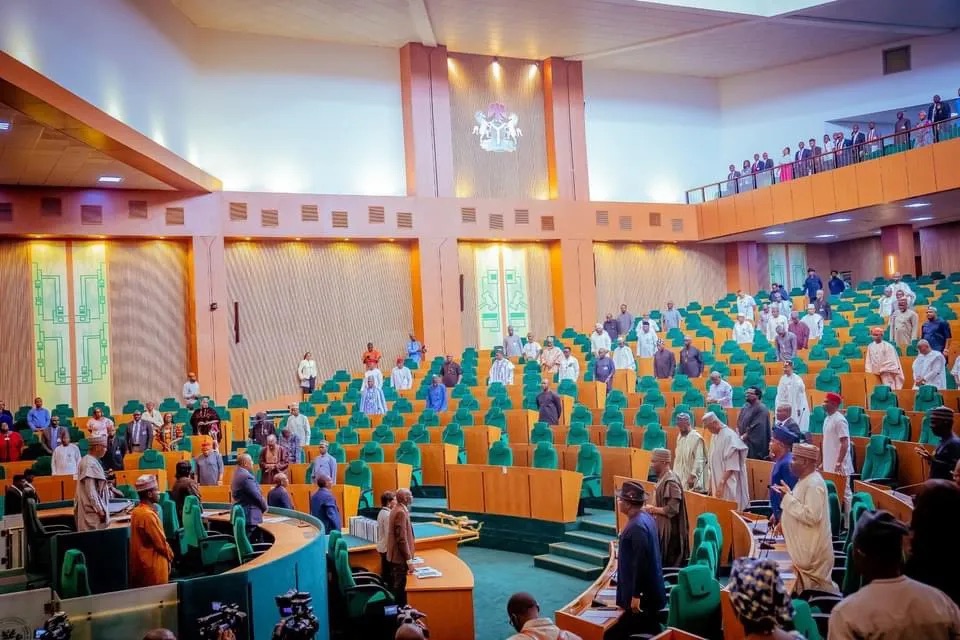
The House of Representatives in Abuja has advanced a proposed tenancy reform bill seeking to protect tenants from compulsory multi-year rent payments, excessive agency charges and unlawful eviction, following its passage for second reading on Wednesday, November 4, 2026.
Also read: Dangote Eyes Egypt Expansion in Major African Boost
The Federal Capital Territory Advance Rent Regulation and Tenants’ Protection Bill, 2026 (HB.2839), jointly sponsored by Paul Nnamchi (APC, Enugu) and Ahmed Doro (PDP, Katsina), seeks to prohibit landlords, estate agents and property managers from compelling tenants to pay more than 12 months’ rent in advance as a condition for securing or renewing accommodation.
The proposal covers both residential and commercial properties across the FCT and forms part of a wider attempt to introduce clearer rules for rental transactions in the territory.
Leading the debate, Nnamchi said the growing cost of accommodation and demands for large upfront payments had placed considerable pressure on households, small businesses and workers seeking employment opportunities in Abuja.
He argued that the proposed legislation would establish a more transparent rental market while protecting the legitimate interests of property owners and housing professionals.
“Landlords deserve reasonable returns. Agents deserve professional recognition. And tenants deserve fairness and protection from exploitation,” Nnamchi told lawmakers.
He maintained that the legislation was not intended to undermine property ownership or discourage investment in real estate, but to ensure that commercial interests did not expose tenants to unfair treatment.
The bill, which passed first reading on October 22, generated considerable debate during Wednesday’s plenary, with lawmakers expressing different views on the extent to which government should regulate rental transactions.
One of its central provisions is Section 4, which seeks to prevent landlords, estate agents and property managers from demanding, receiving or compelling tenants to pay more than 12 months’ rent upfront when granting, renewing or continuing a tenancy.
However, the proposed restriction does not completely prohibit payments covering more than one year.
A tenant would still be permitted to voluntarily pay beyond 12 months, provided the arrangement was initiated without pressure, threats or discrimination and properly documented in writing.
The distinction means that landlords would not be allowed to make two years’ rent a compulsory condition for securing a property, but tenants who independently prefer a longer payment arrangement could still agree to one under the proposed framework.
Several lawmakers supported the bill, citing the financial difficulties residents and businesses face when trying to secure accommodation in the FCT.
Chinedu Ogah (APC, Ebonyi) said the cost of renting office space in parts of Abuja had become a significant burden for businesses.
“Renting a three-bedroom office in Wuse could cost between ₦25 million and ₦30 million annually, excluding agency charges,” he said.
Ogah argued that clearer rules would help address excessive charges and provide greater certainty for businesses and investors.
Idris Zacharias (PDP, Kogi) described the proposal as important but urged lawmakers to consider broader land and housing challenges in the FCT. He also called for the House Committee on FCT and Area Councils to participate in its consideration.
Leko Gambo (APC, Bauchi) supported the proposal but questioned the use of the word “prohibit”, suggesting that the legislation should emphasise regulation rather than an outright ban on multi-year rental arrangements.
He also proposed extending the bill’s coverage beyond the FCT. Deputy Speaker Benjamin Kalu, who presided over the session, clarified that the proposal was specifically designed for the territory.
However, not all lawmakers agreed with the proposed restrictions.
Ibe Osonwa (LP, Abia) cautioned against excessive government interference in private rental arrangements, arguing that landlords and tenants should retain the freedom to negotiate mutually acceptable payment terms.
“This is a free market situation. By the free market economy, are we now going to, for every good or service that is sold outside, start to tell people how to trade in their own businesses?” he asked.
Joseph Bagudu (APC, Kaduna) also favoured regulation over prohibition, saying property owners needed to recover their investments, particularly as the cost of building materials continued to rise.
He further questioned claims that agency fees could reach 25 per cent of annual rent, arguing that charges were generally closer to 10 per cent.
Ayodeji Alao-Akala (APC, Oyo), on the other hand, supported the bill, saying it was intended to address compulsory demands for multiple years’ rent rather than prevent landlords from reviewing rental prices.
He argued that requiring young couples and other prospective tenants to pay two years’ rent upfront placed an unreasonable financial burden on people trying to secure accommodation.
Patrick Umoh (APC, Akwa Ibom) raised concerns about possible constitutional implications, particularly in relation to property rights and freedom of trade. He urged the House to step down the proposal for further consultation and a review of existing tenancy laws.
Wale Raji (APC, Lagos) said the country’s rental challenges could not be resolved through legislation alone, pointing to the imbalance between housing supply and demand as a major factor behind rising accommodation costs.
He called for greater investment in social housing and increased housing supply to address the underlying pressures in the market.
Sunday Umeh (APC, Enugu) disagreed with suggestions that the proposal violated the Constitution, arguing that the legislative process would provide opportunities to examine and amend any contentious provisions.
“The bill is not anti-investment. The bill is not against landlords or those investing in the real estate environment or industry. This bill is of good use to both the landlords and the tenants,” he said.
The Minority Leader, Frederick Agbedi (PDP, Bayelsa), also backed the proposal, saying high rental costs were forcing some Abuja residents into overcrowded and unsuitable accommodation in suburban communities.
House Leader Julius Ihonvbere (PDP, Edo) supported the bill and highlighted concerns about unregistered estate agents and the difficulties tenants encounter when searching for accommodation.
He said the proposal would proceed to a public hearing, allowing residents, housing professionals and other interested groups to contribute to its consideration.
“We are in a stage where we have a duty to protect Nigerians. It’s not against you to build your house. You can build as many houses as you want,” Ihonvbere said.
In his closing remarks, Kalu referred to Section 16 of the 1999 Constitution, which outlines the economic objectives of the Nigerian state, including the promotion of citizens’ welfare and the provision of suitable and adequate shelter.
He argued that Nigeria operated a mixed economy in which government intervention remained necessary in certain sectors, particularly those connected to essential human needs.
“Not all sectors of the economy should be free and capitalist, especially when it has to do with shelter, which is fundamental. So, some sectors should be regulated as well as controlled,” he said.
Beyond advance rent payments, the 17-page proposal seeks to establish a broader regulatory framework for tenancy arrangements in the FCT.
It provides for the establishment of a Federal Capital Territory Rent Regulation and Tenants’ Protection Authority, which would oversee rental practices, investigate complaints, mediate disputes and enforce compliance.
The proposed authority would also maintain a unified digital register of housing agents, while the legislation seeks to regulate agency and agreement fees and provide safeguards against arbitrary rent increases and unlawful eviction.
The bill proposes financial penalties for violations, including fines ranging from ₦500,000 to ₦5 million for individual offenders and between ₦5 million and ₦20 million for corporate offenders.
Despite its proposed 12-month restriction, the legislation does not introduce a general ceiling on rental prices or compel landlords to accept monthly payments.
A landlord could still require a tenant to pay a full year’s rent upfront, provided the demand does not exceed the proposed limit. The amount charged as annual rent would also remain subject to the applicable tenancy agreement and other relevant laws.
This means the proposal would address one major difficulty in Abuja’s rental market, the pressure to raise several years’ rent at once, but would not by itself resolve the wider challenges of housing affordability, limited supply and rising construction costs.
With the bill having passed second reading, it is expected to undergo further scrutiny at committee level and a public hearing, where landlords, tenants, estate agents, housing professionals and government representatives will have an opportunity to make submissions.
It must still pass the remaining legislative stages, including third reading and consideration by the Senate, before being transmitted for presidential assent.
Also read: Lagos Targets $50bn Climate Investment, Unveils 300 Projects
Until that process is completed and the legislation comes into force, the proposed 12-month restriction remains a bill and does not constitute an enforceable ban on landlords demanding multiple years’ rent in advance.