
UNICEF Raises Alarm Over Five Polio Detections in Niger
Three detections came from human samples and two from environmental surveillance, prompting renewed calls for vaccination and stronger disease monitoring in Bida and Chanchaga
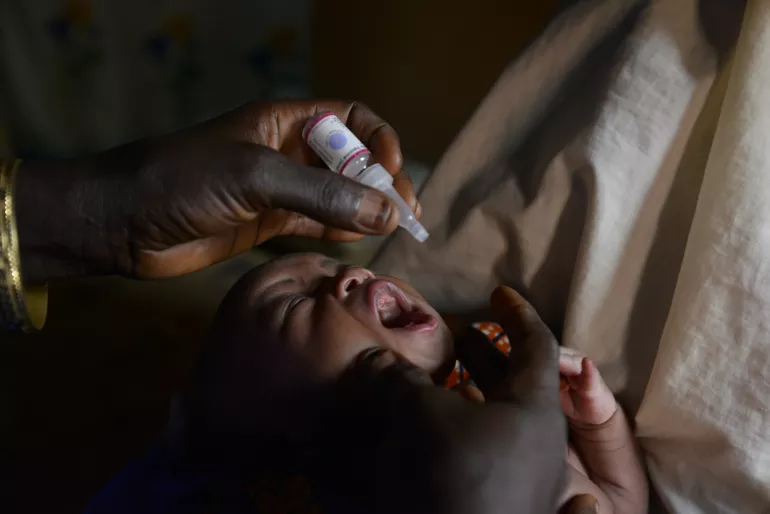
The United Nations Children’s Fund (UNICEF) has raised concerns over the continued circulation of poliovirus in Niger State after five detections were recorded through human and environmental surveillance, prompting renewed calls for vaccination and stronger disease monitoring.
Also read: NCDC Clarifies ₦10bn Ebola Fund, Lists 7 Health Threats
The agency disclosed this on Wednesday, November 4, 2026, during a mass mobilisation dialogue organised in collaboration with the Niger State Primary Health Care Development Agency.
UNICEF representative, Mrs Grace Odeyemi, said three of the detections came from human samples, while two were identified through environmental surveillance in Bida and Chanchaga Local Government Areas.
She urged residents to support routine immunisation, strengthen community awareness and cooperate with health workers to prevent further transmission of the virus.
Odeyemi explained that health officials monitored children displaying symptoms of paralysis and collected samples for laboratory examination to establish whether their condition was caused by poliovirus or another illness.
“We still carry out routine immunisation of the population. We are vaccinating the children to ensure that we eradicate the disease from the state. We sample humans, that is, any child that we find in the community with paralysis, having a similar feature to polio-affected victims.
“We quickly notify our local surveillance officers to collect samples for tests to see if it is polio or something else that is actually causing the paralysis because it’s not only the polio virus that causes paralysis,” she said.
She also explained that environmental surveillance helped health authorities identify the virus in samples collected from the surroundings, even where no corresponding human case had been identified.
“We detected the virus in Chanchaga and also in Bida. The virus is still circulating within our environment where we collected the sample.
“So, we have one reported in Chanchaga and the second one was also found from environmental sampling in Bida, LG, making a total of five polio detections we have in the state, three from human and two from environmental sampling,” she added.
The Niger State Immunisation Officer, Abubakar Usman, also confirmed the five detections, saying the government had introduced routine and reactive vaccination to protect children and contain further transmission.
He explained that reactive vaccination involved promptly immunising children in communities where the virus had been detected.
“The virus was detected in the state. We found three from human and two from environmental sampling and a lot of strategies have been put in place to curtail the spread of these diseases.
We did reactive vaccination, that is, we promptly reacted to vaccinate other children within those areas where those viruses were actually found,” Usman said.
He added that health authorities had intensified engagement with traditional rulers, religious leaders and other community groups to improve public understanding of the importance of immunisation.
Usman attributed the continued circulation of the virus partly to poor routine immunisation coverage and resistance to vaccination in some communities.
“All of this is as a result of what? Poor routine immunisation.
The virus is here and it is as a result of a high level of non-compliance.
This is just a drop in the ocean. We are able to see this because it’s a campaign. We have to go out to actually act rather than the concept of the mother to bring their child for vaccination compared to routine immunisation that is voluntary,” he said.
The latest detections come months after Niger State reported three new polio cases in Magama and Mariga Local Government Areas, raising concerns among health authorities and prompting renewed efforts to strengthen surveillance and community mobilisation.
In June 2026, the state government, working with UNICEF and other partners, organised engagements involving traditional rulers, religious leaders and community stakeholders to improve disease prevention and emergency response.
Nigeria was certified free of wild poliovirus in August 2020 after more than three years without a detected case. However, the achievement did not mean that all forms of poliovirus had been eliminated from the country.
Circulating vaccine-derived poliovirus remains a public health concern, particularly in communities where routine immunisation coverage is inadequate. The virus can emerge and spread in populations with low immunity, making sustained vaccination essential.
The Global Polio Eradication Initiative’s October 28, 2026 update also recorded continuing vaccine-derived poliovirus activity in Nigeria, including detections of type 3 in the country.
UNICEF and state health authorities are therefore urging parents and caregivers to ensure that eligible children receive their polio vaccines, while encouraging community leaders to counter misinformation and support immunisation campaigns.
Also read: NDLEA, Australian Police Sign Pact Against Drug Cartels
The agency stressed that effective surveillance, prompt vaccination and community cooperation remain critical to preventing further spread and achieving a polio-free Niger State.