

VeryDarkMan Hospitalised for Four Days After Severe Malaria in China
The 32-year-old activist says he spent four days in hospital after ignoring medical advice and taking oral medication, as his experience raises concerns about malaria awareness and treatment in Nigeria
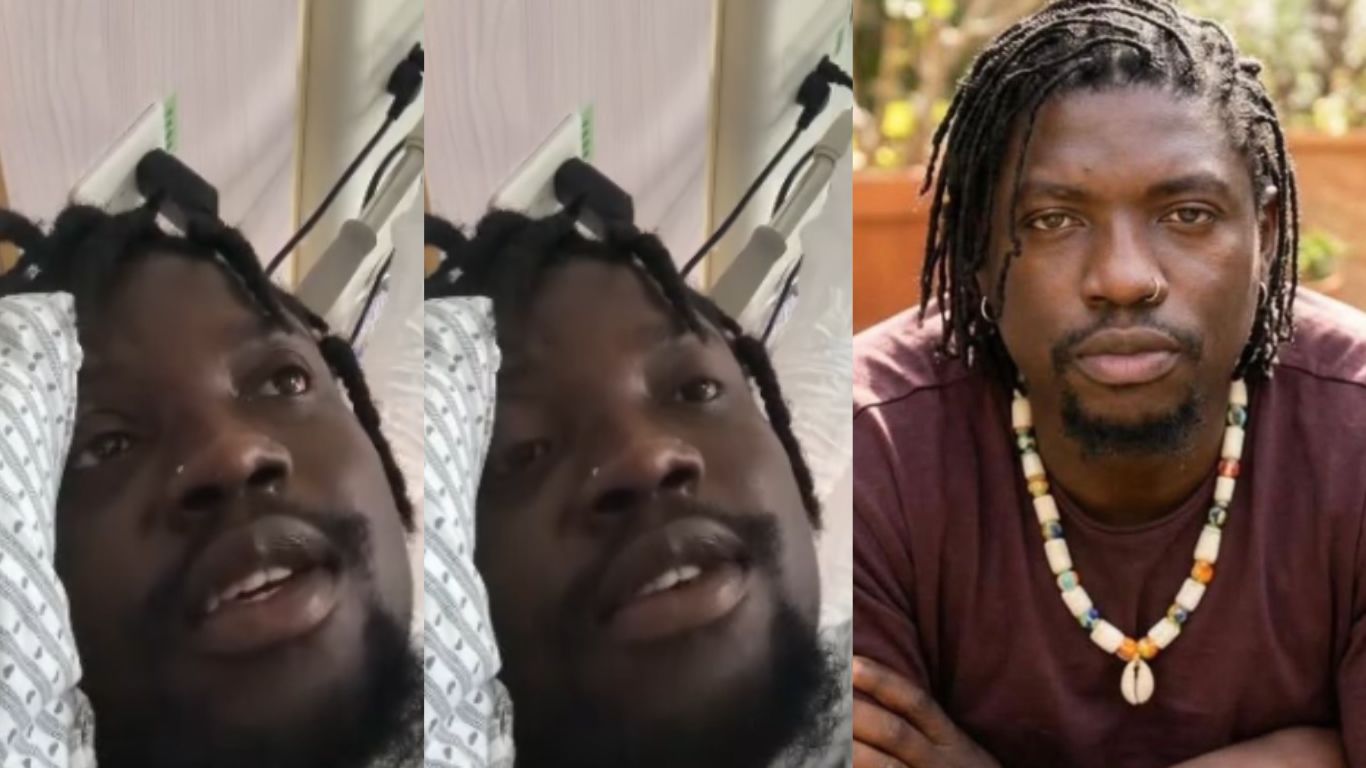
Social media activist Martins Vincent Otse, popularly known as VeryDarkMan, has recounted how he narrowly escaped death after developing severe malaria in China, where he says he spent four days in hospital under medical observation following a worsening health condition.
Also read: Seyi Vibez Gifts Father Second Lagos House in Heartwarming Gesture
The 32-year-old activist disclosed the experience in a video shared on Thursday, November 19, 2026, explaining that what initially appeared to be an ordinary bout of malaria quickly became a life-threatening medical emergency after he disregarded a Chinese doctor’s advice and opted for oral medication.
VeryDarkMan said the experience was particularly frightening because he had never previously spent a night in hospital throughout his 32 years.
He explained that his ordeal began when he visited a hospital in China, where medical examinations confirmed that he had malaria. However, the attending doctor reportedly warned him that the infection was severe and required immediate medical intervention.
Recounting the conversation, the activist said the doctor made it clear that his condition was not an ordinary malaria infection.
“When we got to the first hospital and the doctor did the whole test and everything, then he said, ‘You have malaria.’ I said, ‘Okay, cool.’ He said, ‘No, this is not the normal malaria.
This is the life-threatening malaria you have. You have to take care of that now,'” he recalled.
According to him, he subsequently contacted a doctor friend in Nigeria and shared his test results for a second opinion.
However, the Nigerian doctor reportedly suggested that the infection was a common form of malaria, leaving him doubtful about the seriousness of the Chinese doctor’s warning.
The activist said he eventually approached members of the Nigerian community in China to obtain malaria medication after deciding against following the initial hospital’s recommendation.
He explained that the Chinese doctor had specifically advised against oral medication, insisting that the drugs needed to be administered intravenously.
VeryDarkMan admitted that he dismissed the warning at the time.
“Before I left, the doctor looked at me and told me, ‘They have to make things go through your veins. Oral is not going to work. It’s going to make it worse.’
“I looked straight at him like, ‘Well, this guy, he talks bullshit.’ I left and I went, I collected the drug,” he said.
The activist further disclosed that the first medication provided by someone in the Nigerian community had expired, forcing him to request another supply before eventually taking the replacement drugs.
Although he initially felt better after taking the medication and returned to his hotel to rest, his condition reportedly deteriorated significantly later that night.
Describing the frightening development, VeryDarkMan said he experienced a sudden worsening of his symptoms and feared he might not survive.
“My brothers and sisters, yesterday night, I swear to God, I nearly died, bro. No jokes. Exactly what the doctor said. The drugs turned against me. It became two times worse,” he said.
The deterioration forced him to return to the hospital, where further medical examinations were conducted. According to him, doctors insisted that he remain admitted for treatment and observation.
He said the hospital initially recommended a seven-day admission but later reduced the period to four days after assessing his condition and prospects of recovery.
“They initially said seven, but they said that they’ve seen me, that I look like I was going to recover quickly. Four days,” he explained.
VeryDarkMan also said he had been placed in quarantine, although the specific medical reason for the arrangement was not independently established in his account.
His experience subsequently prompted him to reflect on China’s success in eliminating indigenous malaria transmission and the implications for Nigeria, where the disease continues to pose a major public health challenge.
The activist attributed China’s achievement to mosquito control, expressing amazement that residents were no longer exposed to locally transmitted malaria.
“They don’t have malaria because they killed the malaria in all their mosquitoes. So even if their mosquitoes bite them, it’s not going to affect them. I don’t know how they did that, but that’s crazy,” he said.
China was officially certified malaria-free by the World Health Organisation in June 2021, following decades of sustained prevention, surveillance, diagnosis, treatment and mosquito-control programmes.
The WHO explained that China had moved from reporting approximately 30 million malaria cases annually in the 1940s to recording four consecutive years without locally transmitted cases before receiving the certification.
However, the certification does not mean that imported malaria cases have disappeared. China continues to monitor people returning from malaria-endemic countries to prevent the re-establishment of local transmission.
VeryDarkMan’s experience also comes against the backdrop of Nigeria’s enormous malaria burden, with the activist expressing concern that many people could be dying from severe infections without understanding the seriousness of their condition or receiving appropriate medical attention.
“If this thing, as strong as I am, can keep me here, this thing don kill a lot of people in Nigeria,” he said.
He called for stronger public education on malaria, particularly the importance of early diagnosis, appropriate medication and recognising when an infection has progressed into a severe stage.
The activist also urged Nigerians to avoid self-medication and seek professional medical advice rather than assume that every malaria infection could be treated with readily available oral drugs.
“Malaria awareness needs to be done in that country. People need to know that there are five grades of malaria. There are a lot of education that needs to be done,” he said.
He further appealed to the Federal Government to intensify mosquito-control programmes, suggesting that Nigeria could learn from China’s long-term investment in eliminating local malaria transmission.
“Why will the government just do what the Chinese do? Just eradicate the malaria from the mosquito. I don’t know how they do it, but whatever money they spent, they probably spent twice that on campaigns and other things,” he added.
The activist also expressed concern about people living in rural communities, where limited access to hospitals, diagnostic facilities and effective treatment could make severe malaria particularly dangerous.
He said his experience had made him think about vulnerable Nigerians who might not have the resources or medical assistance required to survive a similar health emergency.
The WHO’s malaria elimination programme offers some context to his observations.
China’s achievement was not the result of a single mosquito-control intervention but a coordinated national effort involving public health authorities, researchers, healthcare providers and several government ministries.
The programme included reducing mosquito breeding sites, insecticide spraying, insecticide-treated nets, accessible diagnosis and treatment, and a surveillance system designed to identify and respond quickly to infections.
Nigeria, meanwhile, remains one of the countries most affected by malaria worldwide.
According to the WHO’s World Malaria Report 2025, which assessed the 2024 disease burden, Nigeria accounted for approximately 24.3 per cent of global malaria cases and 30.3 per cent of malaria deaths.
The figures underline the scale of the challenge facing the country, particularly among children and other vulnerable populations.
Medically, severe malaria is a potentially fatal condition that requires urgent hospital treatment.
The WHO identifies complications including impaired consciousness, convulsions, breathing difficulties, jaundice and organ-related complications.
The US Centres for Disease Control and Prevention also identifies intravenous artesunate as the recommended initial treatment for severe malaria, followed by a complete course of oral antimalarial medication when the patient is stable enough to take it.
Medical experts also distinguish between the five malaria-causing parasite species and the clinical severity of the disease.
The five species are Plasmodium falciparum, Plasmodium vivax, Plasmodium malariae, Plasmodium ovale and Plasmodium knowlesi. Severe malaria is a clinical classification, not a universally recognised five-grade system.
Malaria is primarily transmitted through the bites of infected female Anopheles mosquitoes.
It is not ordinarily spread through casual contact between people, although transmission can occur through infected blood, including blood transfusions and contaminated needles.
While the precise circumstances surrounding VeryDarkMan’s diagnosis and hospital admission have not been independently confirmed, his account has drawn attention to the dangers of dismissing medical advice and attempting to manage potentially severe infections without proper supervision.
Also read: Crayon Accuses Mavin Records, Ends Friendship With Rema
His four-day hospital experience has also provided a sobering reminder of the importance of early testing, effective treatment and sustained investment in malaria prevention, particularly in a country where the disease continues to claim thousands of lives.



