

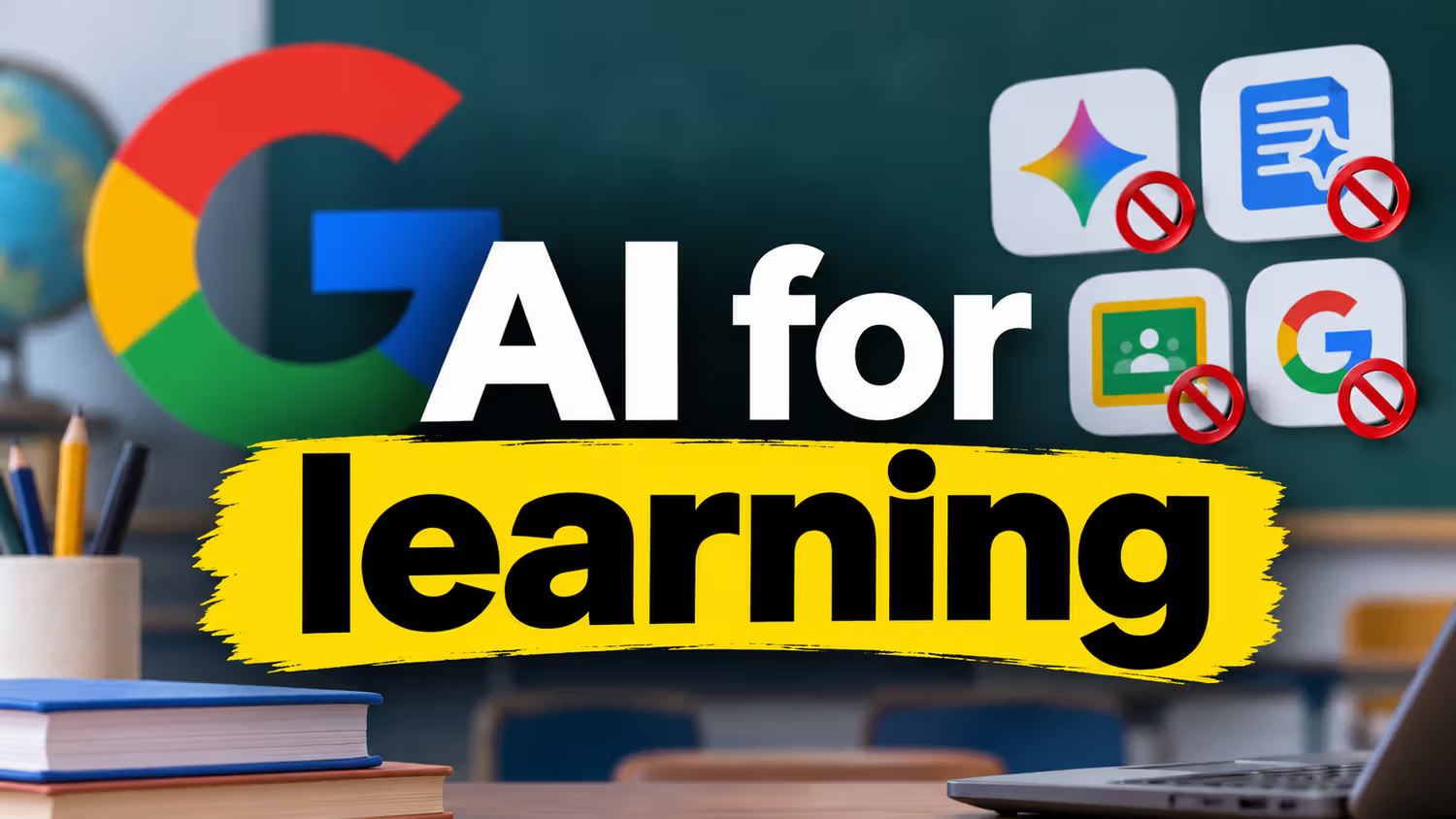
Google Switches Off AI Tools for Schoolchildren by Default
The policy change gives school administrators control over student access to Gemini and other AI services, but schools that reject AI will also lose access to Google Search without its AI features
Google has announced plans to disable its artificial intelligence tools by default for primary and secondary school students, following criticism over the company’s growing integration of AI into classroom learning.
Also read: APC Highlights Tinubu’s Education Reforms Ahead of 2027 Poll
The changes, announced on Tuesday, November 3, 2026, will affect K-12 student accounts using Gemini, Gemini Notebook, Gemini in Classroom and Google Search. School administrators will have to activate the services before students can access them.
Google said the revised controls followed feedback from teachers, school administrators, researchers and policymakers who had raised concerns about the growing use of artificial intelligence in education.
The company has not announced a specific implementation date, although reports indicate that the changes are expected to take effect in early 2027. The rollout will begin in the United States before extending worldwide.
However, the announcement has drawn attention to a significant complication involving Google Search.
Although schools will be able to activate individual services, they will not have the option of providing students with Google’s search engine entirely free of its AI features.
Google’s Vice President for Education, Chris Phillips, explained to The New York Times that artificial intelligence had become deeply integrated into the company’s search technology.
He said schools that chose to block AI completely would also prevent students from accessing Google Search, with users instead receiving a message indicating that the service was unavailable through their school accounts.
The arrangement means administrators will have to consider whether to allow students access to AI-enhanced search or restrict the service altogether.
Google has defended the changes, saying they are intended to give schools greater control over how its technology is used in classrooms.
In a statement shared on X, the company said the announcement offered schools more choice, rather than limiting their options.
Google also acknowledged concerns that students could use AI tools to bypass schoolwork instead of developing their understanding of academic subjects.
The company said schools had asked for greater control over student access to the technology and that the new settings were designed to address those concerns.
The policy shift follows criticism of Google’s decision in August to make its Gemini chatbot available to students of all ages through Google Classroom.
The feature provided students with guided assistance, study guides, practice quizzes, flashcards and prompts tailored to their classes and assignments.
Its introduction raised questions among educators and parents about whether students were being given too much access to generative AI without sufficient safeguards or clear classroom policies.
Google’s education platform has a significant presence in schools, with more than 150 million students and teachers worldwide using Google Classroom, according to figures cited by US senators Richard Blumenthal and Josh Hawley in correspondence with the company.
The company’s educational services also include Gmail, Google Docs and Classroom, while its Chromebook laptops are widely used in American schools.
The controversy has attracted criticism from political leaders, including New York City Mayor Zohran Mamdani, who accused Google of using its dominant position in the education technology market to encourage schools to adopt artificial intelligence.
In a post on X, Mamdani said: “Google is trying to use its monopoly power to force AI into our public schools.”
He added that no corporation should have the authority to dictate how children are taught.
The debate has also intensified as school authorities in major American cities review the place of artificial intelligence in education.
New York and Los Angeles announced plans in September to restrict access to AI tools on school devices as they considered the potential effects of the technology on students.
A spokesperson for the Los Angeles Unified School District said the authority was reviewing Google’s announcement and its possible implications for schools, teachers and pupils.
The district acknowledged that artificial intelligence could improve teaching and learning when introduced carefully, with appropriate safeguards.
It also stressed that technology should support rather than replace teachers, while protecting students’ privacy.
Meanwhile, Google is introducing a feature called Guided Learning, designed to encourage students to understand academic concepts rather than simply receive answers from an AI chatbot.
The feature is intended to guide students through problems step by step, helping them develop critical thinking and problem-solving skills.
Google has made Guided Learning available in Classroom globally, while a pilot programme for its integration into Search is expected to begin in selected US schools later in November.
The development reflects the growing debate over how technology companies, educators and policymakers should balance the educational opportunities offered by artificial intelligence with concerns about academic independence, privacy and children’s development.
Also read: FG Begins ₦50,000 Relief Payments for Vulnerable Nigerians
Although Google’s new controls will give school administrators greater authority over student access to its AI products, the integration of artificial intelligence into Search means schools seeking to avoid the technology will face an additional challenge.