
Wike Declares Obi’s 2027 Political Wave ‘Dead’
The FCT minister dismisses Peter Obi’s chances of repeating his 2023 electoral performance, questions the reach of his alliance with Rabiu Kwankwaso and criticises Atiku Abubakar
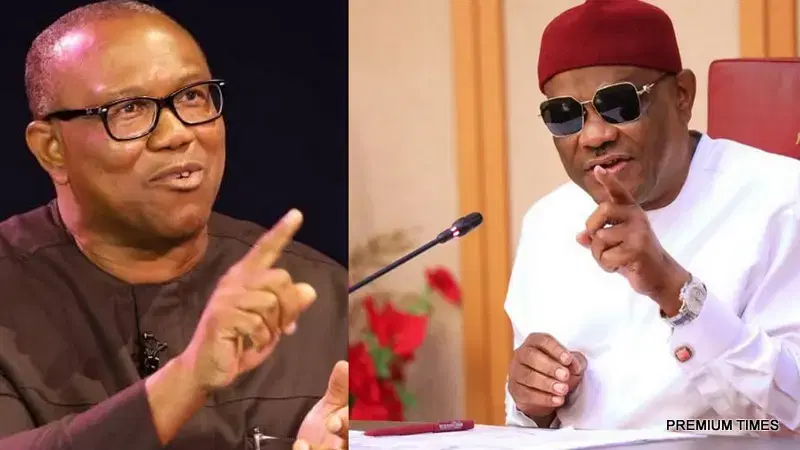
Federal Capital Territory (FCT) Minister Nyesom Wike has declared that the political movement which propelled Peter Obi to prominence during the 2023 presidential election has lost its influence, claiming responsibility for its decline ahead of the 2027 polls.
Also read: Aisha Yesufu Launches Fundraiser for Peter Obi’s 2027 Bid
Wike made the remarks on Thursday, November 5, 2026, during his monthly media chat in Port Harcourt, Rivers State, where he criticised the presidential ambition of the Nigeria Democratic Congress (NDC) candidate and questioned the strength of his proposed alliance with former Kano State Governor Rabiu Musa Kwankwaso.
“All this so-called Obi kererenke doesn’t exist again. I have killed it,” the minister declared.
He argued that the political circumstances which helped Obi attract significant support in 2023 had changed, adding that the former Anambra State governor had little to offer Nigerians.
“Nigerians know that Obi has nothing to offer, he is a dramatist. You were there when Soludo exposed him,” Wike said, referring to comments previously made by Anambra State Governor Chukwuma Soludo about Obi’s record in office.
The minister also challenged Obi’s supporters to demonstrate that the enthusiasm and financial contributions associated with his previous campaign remained intact.
“The Obi wave is dead and buried. How many people are contributing money for Obi today?” he asked.
Obi’s political prominence grew significantly during the 2023 presidential election, when he contested under the Labour Party and attracted considerable support, particularly among young voters and urban communities.
The Independent National Electoral Commission’s declared results showed that Obi received 6,101,533 votes, representing 25.4 per cent of valid votes.
He finished third behind President Bola Tinubu, who secured 8,794,726 votes, and former Vice-President Atiku Abubakar, who polled 6,984,520.
Kwankwaso, who contested under the New Nigeria Peoples Party, received 1,496,687 votes and won Kano State.
Ahead of the 2027 election, Obi has moved to the NDC, where he secured the presidential ticket and selected Kwankwaso as his running mate.
The alliance brings together two politicians who contested separately in 2023, with Kwankwaso’s support base in Kano and Obi’s nationwide following forming part of the political calculations behind the partnership.
The NDC has also established its national campaign council to coordinate activities ahead of the election.
Wike acknowledged Kwankwaso’s political strength in Kano but questioned whether it could translate into comparable support across other parts of northern Nigeria.
“I agree that Kwankwaso is very popular, but he ran in 2023 and won in Kano, fine, but what about the other northern states? What about the North-Central, what will happen there?” he queried.
The minister’s comments also extended to Atiku, who emerged as the ADC’s presidential candidate for the 2027 election. Wike argued that Nigerians had previously given the former vice-president an opportunity to serve but had not received the results they expected.
“Nigerians know that Atiku and co have been given the opportunity, but they did not do anything,” he said, according to TheCable’s report of the media chat.
However, Atiku’s candidacy faced a significant legal setback on the same Thursday.
The Federal High Court in Abuja nullified the processes that produced the David Mark-led ADC leadership and set aside the actions taken by the committee, including Atiku’s nomination as the party’s presidential candidate.
The ADC rejected the ruling and said it would appeal, describing the decision as politically motivated. The legal challenge therefore introduced uncertainty around the party’s preparations for the 2027 election.
Wike’s remarks come amid intensifying political activity as parties and their candidates prepare for the next general election.
His comments add to the increasingly sharp exchanges between figures aligned with the Federal Government and opposition politicians seeking to challenge President Bola Tinubu.
While Wike presented his assessment of Obi’s political standing as a settled matter, the scale of support for the NDC ticket remains a question for the electoral process to determine.
Also read: 2027: Peter Obi Vows Emergency Action on Corruption, Power Crisis if Elected
His remarks reflect his political position rather than an independently established measure of the opposition candidate’s current popularity.