

No Cane Needed: 92.7% of Lagos Pupils Back Alternative Discipline Methods
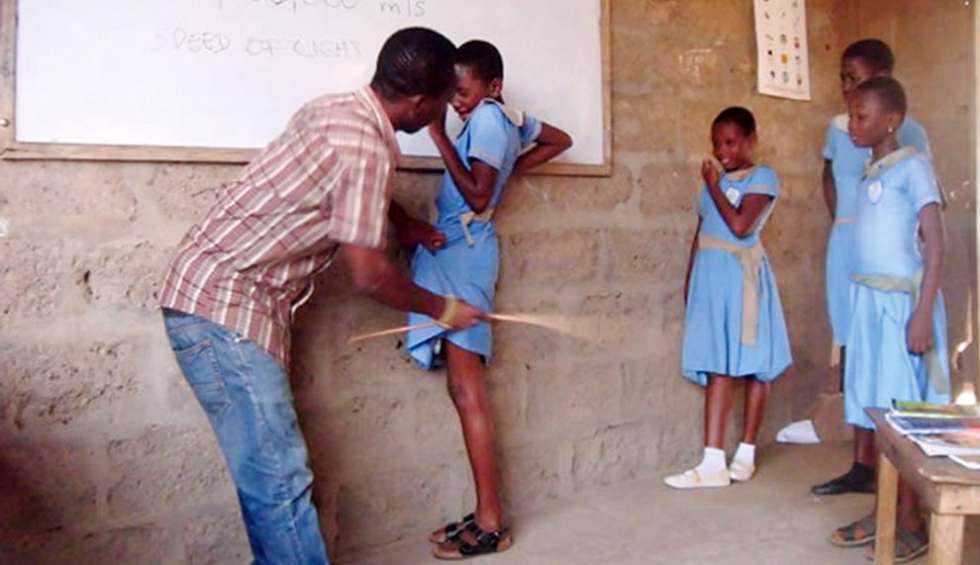
A study presented by the Ajoke Ayisat Afolabi Foundation suggests teachers can maintain classroom discipline without corporal punishment, challenging concerns that the restriction of caning has weakened their authority
The finding adds to an ongoing debate in Lagos schools over how to maintain discipline following the state’s prohibition of corporal punishment.
Also read: BREAKING: ADC Leadership Ruling Sacks David Mark-Led Team
A separate school discipline roundtable in October 2026 also highlighted calls for clearer disciplinary guidelines, more guidance counsellors and stronger cooperation between parents and school authorities.
The study, presented by the Ajoke Ayisat Afolabi Foundation, found a notable difference between teachers’ concerns about their authority and pupils’ assessment of classroom discipline.
While some teachers and school administrators feared that restricting corporal punishment had weakened their ability to manage misconduct, 92.7 per cent of the pupils surveyed said their teachers retained sufficient authority to maintain order.
The research identified reasonable classroom rules, appropriate consequences, parental involvement, counselling and proper documentation of disciplinary incidents as effective alternatives to physical punishment.
It also encouraged teachers to seek support from school management when dealing with persistent misconduct, emphasising that discipline should be based on guidance, consistency and accountability rather than physical force.
The findings were presented during an engagement organised by the Lagos State Domestic and Sexual Violence Agency (DSVA) for principals, heads of schools and administrators in Education District IV.
The event took place at Lagos City Senior School Hall in Sabo-Yaba, with discussions focused on strengthening child protection and helping school leaders implement non-violent disciplinary practices.
Speaking at the engagement, the agency’s Executive Secretary, Titilola Vivour-Adeniyi, stressed that protecting children from violence must remain a priority for school administrators.
She maintained that discipline should not compromise pupils’ safety and dignity, urging school leaders to adopt positive methods that correct misconduct, provide guidance and encourage responsible behaviour.
Another presentation, facilitated by Amelia Kentebe, examined practical approaches to managing pupils’ behaviour without resorting to physical punishment.
The session introduced participants to child-friendly disciplinary techniques, reinforcing the research’s recommendation that teachers should establish clear expectations and apply appropriate consequences rather than rely on caning.
The engagement forms part of the DSVA’s efforts to strengthen implementation of the Lagos State Safeguarding and Child Protection Policy and the statewide circular prohibiting the use of canes in schools.
Lagos introduced its no-caning policy in 2022 as part of a broader safeguarding programme covering public and private schools.
The initiative was designed to protect pupils from physical and other forms of abuse while encouraging safer learning environments.
The state government reiterated the prohibition in March 2025, when the then Commissioner for Basic and Secondary Education, Jamiu Alli-Balogun, said counselling had been adopted as a corrective measure.
“There is a policy here in Lagos and other parts of the country prohibiting teachers from giving corporal punishment to students/pupils,” he said at the time.
However, the transition has raised questions about how schools should respond to persistent indiscipline and whether teachers have adequate training and institutional support to enforce alternative measures.
At a school discipline roundtable organised by the Ajoke Ayisat Afolabi Foundation in October 2026, education stakeholders called for clearer disciplinary guidelines, more guidance counsellors and stronger partnerships between parents, schools and government.
The discussions reflected concerns that prohibiting physical punishment must be accompanied by practical systems that help teachers manage misconduct and support pupils’ behavioural development.
The latest findings offer an encouraging perspective from pupils themselves, suggesting that teachers can retain classroom authority without physical punishment.
However, the research summary published so far does not specify the number of pupils surveyed or the schools covered, making it difficult to assess how widely the 92.7 per cent finding represents students across Lagos.
Also read: Aisha Yesufu Launches Fundraiser for Peter Obi’s 2027 Bid
For the state, the challenge will be ensuring that the policy is consistently implemented while equipping teachers with the skills, resources and institutional backing needed to maintain orderly and safe classrooms.